National Security

FOIA Case Seeking the Trump Administration’s Legal Justification for Deadly Boat Strikes
The Department of Justice’s Office of Legal Counsel (“OLC�) authored a legal opinion that reportedly claims to justify the Trump administration’s illegal lethal strikes on civilians in boats in the Caribbean Sea and eastern Pacific Ocean. Media reports indicate that, in addition to claiming that the strikes are lawful acts in an alleged “armed conflict� with unspecified drug cartels, the OLC opinion also purports to immunize personnel who authorized or took part in the strikes from future criminal prosecution. Because the public deserves to know how our government is justifying these illegal strikes, and why they think the people who carried them out should not be held accountable, the ACLU is seeking immediate release of the OLC legal opinion and related documents pursuant to the Freedom of Information Act.
Status: Ongoing
View Case
Learn About National Security
Featured
U.S. Supreme Court
Dec 2023
National Security
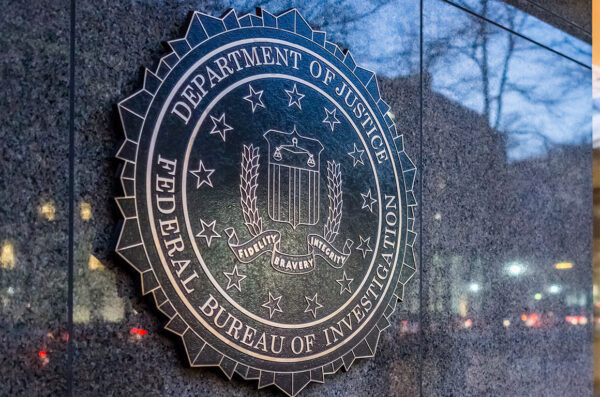
FBI v. Fikre
Whether the government can overcome the voluntary cessation exception to mootness by removing an individual from the No Fly List when the government has not repudiated its decision to place him on the List and remains free to return him to the List for the same reasons and using the same procedures he alleges were unlawful.
Florida
Nov 2023
National Security
+2 ÀÏÊìÅ®ÎçÒ¹¸£Àû
Students for Justice in Palestine at the University of Florida v. Raymond Rodrigues
The University of Florida chapter of Students for Justice in Palestine filed a lawsuit on November 16, 2023, challenging the Chancellor of the State University System of Florida’s order to state universities to deactivate the student group. This order threatens the students’ constitutionally-protected right to free speech and association in violation of the First Amendment. The ACLU and its partners are seeking a preliminary injunction that would bar the Chancellor and the University of Florida from deactivating the UF SJP.
U.S. Supreme Court
Apr 2022
National Security
+2 ÀÏÊìÅ®ÎçÒ¹¸£Àû
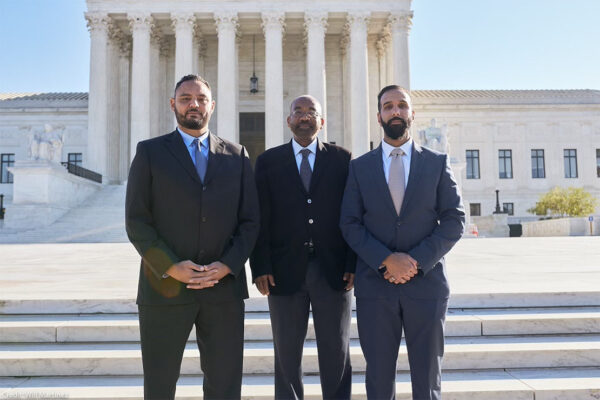
FBI v. Fazaga
In a case scheduled to be argued before the U.S. Supreme Court on November 8, 2021, three Muslim Americans are challenging the FBI’s secret spying on them and their communities based on their religion, in violation of the Constitution and federal law. In what will likely be a landmark case, the plaintiffs — Yassir Fazaga, Ali Uddin Malik, and Yasser Abdelrahim — insist that the FBI cannot escape accountability for violating their religious freedom by invoking “state secrets.â€� The plaintiffs are represented by the Center for Immigration Law and Policy at UCLA School of Law, the ACLU of Southern California, the ÀÏÊìÅ®ÎçÒ¹¸£Àû, the Council for American Islamic Relations, and the law firm of Hadsell Stormer Renick & Dai.
U.S. Supreme Court
Jul 2021
National Security
Immigrants' Rights
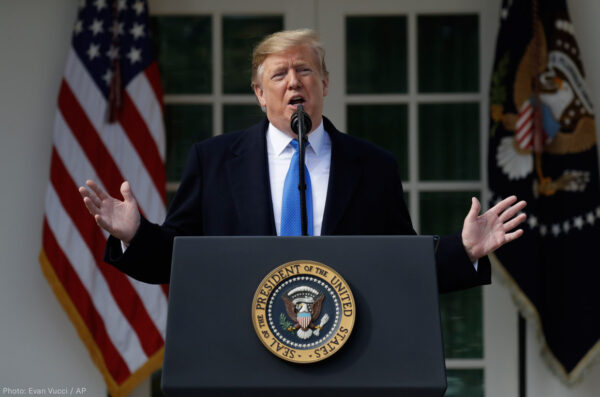
Sierra Club v. Trump — Challenge to Trump’s National Emergency Declaration to Construct a Border Wall
In February 2019, the ACLU filed a lawsuit challenging President Trump’s emergency powers declaration to secure funds to build a wall along the southern border. The lawsuit was filed on behalf of the Sierra Club and the Southern Border Communities Coalition. The lawsuit argues that the president is usurping Congress’s appropriations power and threatening the clearly defined separation of powers inscribed in the Constitution. On January 20, 2021, President Biden halted further border wall construction. Litigation in this and subsequent related challenges has been paused or deadlines extended while the ACLU’s clients and the Biden administration determine next steps.
Indiana
Oct 2016
National Security
Immigrants' Rights
Exodus Refugee Immigration, Inc. v. Mike Pence, et al
The ÀÏÊìÅ®ÎçÒ¹¸£Àû and the ACLU of Indiana, on behalf of Exodus Refugee Immigration, filed suit against Governor Mike Pence and the secretary of the Indiana Family and Social Services Administration to stop attempts to suspend resettlement of Syrian refugees, claiming the governor’s actions violate the United States Constitution and federal law.
All Cases
155 National Security Cases
Court Case
Aug 2015
National Security
ACLU v. Department of Defense
In 2003, the ACLU filed a Freedom of Information Act (FOIA) request for records relating to the abuse and torture of prisoners in U.S. detention centers overseas. Since then, the government has released more than 100,000 pages. These documents show both that hundreds of prisoners were tortured in the custody of the CIA and Department of Defense, and that the torture policies were devised and developed at the highest levels of the Bush administration.
Explore case
Court Case
Aug 2015
National Security
ACLU v. Department of Defense
In 2003, the ACLU filed a Freedom of Information Act (FOIA) request for records relating to the abuse and torture of prisoners in U.S. detention centers overseas. Since then, the government has released more than 100,000 pages. These documents show both that hundreds of prisoners were tortured in the custody of the CIA and Department of Defense, and that the torture policies were devised and developed at the highest levels of the Bush administration.
Court Case
Feb 2015
National Security
Amnesty v. Clapper - Challenge to FISA Amendments Act
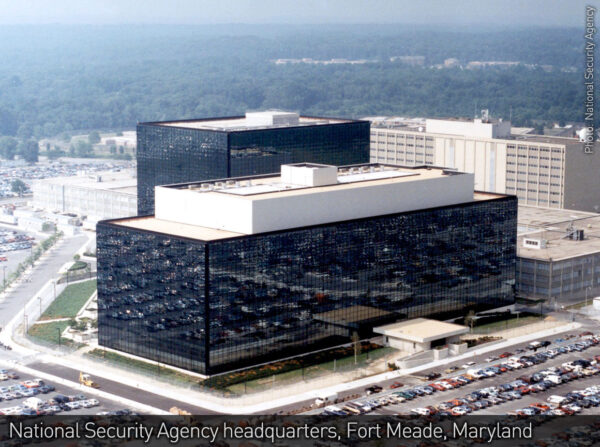
The Foreign Intelligence Surveillance Act (FISA), enacted by Congress after the abuses of the 1960s and 70s, regulates the government’s conduct of intelligence surveillance inside the United States. It generally requires the government to seek warrants before monitoring Americans’ communications. In 2001, however, President Bush authorized the National Security Agency to launch a warrantless wiretapping program, and in 2008 Congress ratified and expanded that program, giving the NSA almost unchecked power to monitor Americans’ international phone calls and emails. In February 2013, the Supreme Court dismissed the ACLU's lawsuit challenging the law.
Explore case
Court Case
Feb 2015
National Security
Amnesty v. Clapper - Challenge to FISA Amendments Act
The Foreign Intelligence Surveillance Act (FISA), enacted by Congress after the abuses of the 1960s and 70s, regulates the government’s conduct of intelligence surveillance inside the United States. It generally requires the government to seek warrants before monitoring Americans’ communications. In 2001, however, President Bush authorized the National Security Agency to launch a warrantless wiretapping program, and in 2008 Congress ratified and expanded that program, giving the NSA almost unchecked power to monitor Americans’ international phone calls and emails. In February 2013, the Supreme Court dismissed the ACLU's lawsuit challenging the law.

U.S. Supreme Court
Jan 2015
National Security
John F. Kerry, Secretary of State, et al., v. Fauzia Din
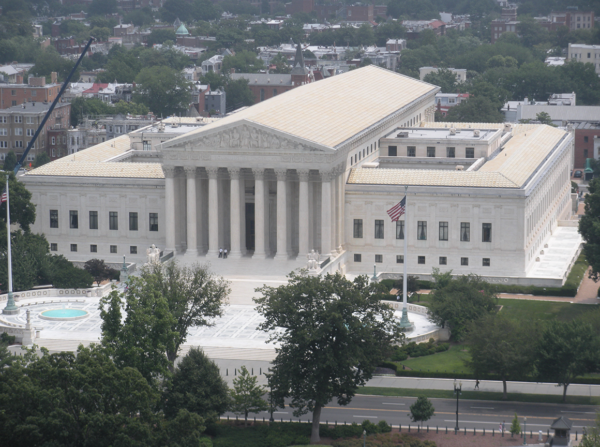
Whether a U.S. citizen can obtain judicial review of a consular decision to deny her spouse a visa.
Explore case
U.S. Supreme Court
Jan 2015
National Security
John F. Kerry, Secretary of State, et al., v. Fauzia Din
Whether a U.S. citizen can obtain judicial review of a consular decision to deny her spouse a visa.
U.S. Supreme Court
Jan 2015
National Security
Abdullah al-Kidd v. United States, et al.
The Fourth Amendment prohibits the arrest of criminal suspects without probable cause to believe they have committed a crime. Yet after 9/11, former Attorney General John Ashcroft and the U.S. Department of Justice implemented a policy of misusing the federal “material witness� statute to detain Muslim men for investigative purposes without probable cause to believe that they’d committed any crime. Pursuant to this policy, our client, Abdullah al-Kidd, a Kansas-born U.S. citizen and former football player at the University of Idaho, was arrested on a material witness warrant in 2003 and imprisoned without charges for 16 days, ostensibly because the government wanted his testimony in someone else’s criminal case. He was never called to testify and never criminally charged.
Explore case
U.S. Supreme Court
Jan 2015
National Security
Abdullah al-Kidd v. United States, et al.
The Fourth Amendment prohibits the arrest of criminal suspects without probable cause to believe they have committed a crime. Yet after 9/11, former Attorney General John Ashcroft and the U.S. Department of Justice implemented a policy of misusing the federal “material witness� statute to detain Muslim men for investigative purposes without probable cause to believe that they’d committed any crime. Pursuant to this policy, our client, Abdullah al-Kidd, a Kansas-born U.S. citizen and former football player at the University of Idaho, was arrested on a material witness warrant in 2003 and imprisoned without charges for 16 days, ostensibly because the government wanted his testimony in someone else’s criminal case. He was never called to testify and never criminally charged.

Court Case
Oct 2014
National Security
ACLU v. FBI - FOIA Case for Records Relating to Patriot Act Section 215
In May 2011, the ACLU filed a Freedom of Information Act request with the Justice Department seeking information about the government's use and interpretation of Patriot Act Section 215, which authorizes the government to obtain “any tangible thing� that is “relevant to� a terrorism investigation. Our subsequent FOIA lawsuit to enforce the request compelled the government to release dozens of documents, although many others were withheld from the ACLU and the public. The ACLU continued to fight for additional disclosures concerning the government’s use of Section 215 to secretly collect Americans’ information in bulk, but the district court eventually granted the government’s motion for summary judgment in March 2015.
Explore case
Court Case
Oct 2014
National Security
ACLU v. FBI - FOIA Case for Records Relating to Patriot Act Section 215
In May 2011, the ACLU filed a Freedom of Information Act request with the Justice Department seeking information about the government's use and interpretation of Patriot Act Section 215, which authorizes the government to obtain “any tangible thing� that is “relevant to� a terrorism investigation. Our subsequent FOIA lawsuit to enforce the request compelled the government to release dozens of documents, although many others were withheld from the ACLU and the public. The ACLU continued to fight for additional disclosures concerning the government’s use of Section 215 to secretly collect Americans’ information in bulk, but the district court eventually granted the government’s motion for summary judgment in March 2015.