Fighting Cuts to Voting Access
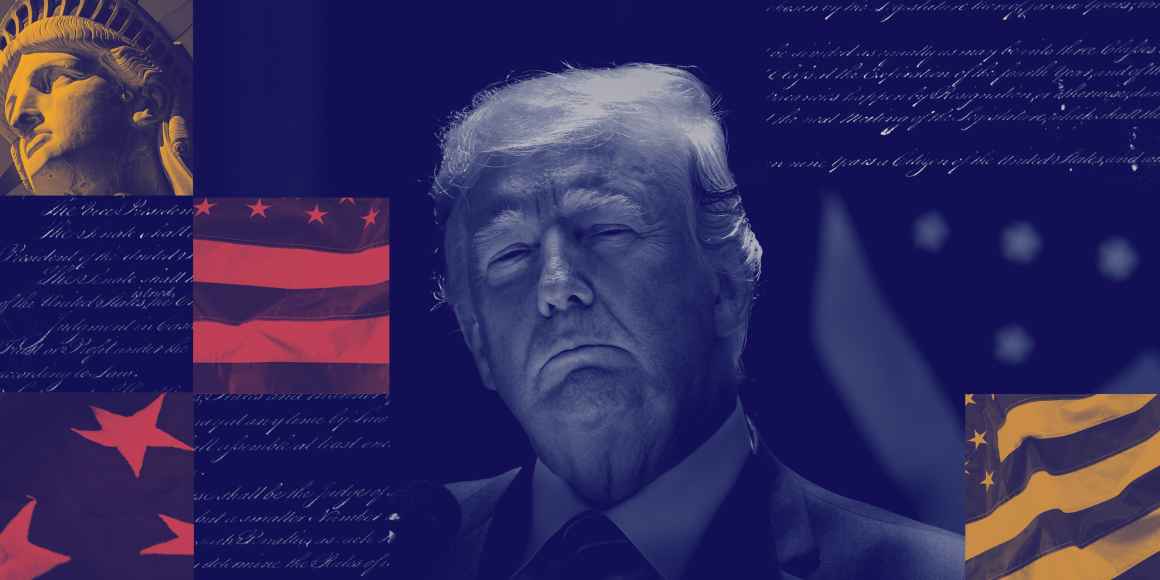
League of Women Voters Education Fund v. Trump
On March 25, 2025, in a sweeping and unprecedented Executive Order, President Trump attempted to usurp the power to regulate federal elections from Congress and the States. Among other things, the Executive Order directs the Election Assistance Commission鈥攁n agency that Congress specifically established to be bipartisan and independent鈥攖o require voters to show a passport or other citizenship documentation in order to register to vote in federal elections. If implemented, the Executive Order would threaten the ability of millions of eligible Americans to register and vote and upend the administration of federal elections.
On behalf of leading voter registration organizations and advocacy organizations, the ACLU and co-counsel filed a lawsuit to block the Executive Order as an unconstitutional power grab.
Status: Ongoing
View Case
Learn About Fighting Cuts to Voting Access
All Cases
46 Fighting Cuts to Voting Access Cases

Hawaii
Jan 2026
Fighting Cuts to Voting Access
United States v. Nago
The Department of Justice sued the Hawai鈥榠 Secretary of State, demanding the state produce its full, unredacted voter file, which contains highly sensitive and personal data on every voter in the state. This suit appears to be part of the federal government's efforts to build a national voter database without congressional authorization and to improperly question the validity of state voter rolls.
Explore case
Hawaii
Jan 2026
Fighting Cuts to Voting Access
United States v. Nago
The Department of Justice sued the Hawai鈥榠 Secretary of State, demanding the state produce its full, unredacted voter file, which contains highly sensitive and personal data on every voter in the state. This suit appears to be part of the federal government's efforts to build a national voter database without congressional authorization and to improperly question the validity of state voter rolls.
Massachusetts
Jan 2026
Fighting Cuts to Voting Access
California v. Trump (Amicus)
On March 25, 2025, in a sweeping and unprecedented Executive Order, President Trump attempted to usurp the power to regulate federal elections from Congress and the States. Among other things, the Executive Order directs the Election Assistance Commission鈥攁n agency that Congress specifically established to be bipartisan and independent鈥攖o require voters to show a passport or other citizenship documentation in order to register to vote in federal elections. If implemented, the Executive Order would threaten the ability of millions of eligible Americans to register and vote and upend the administration of federal elections.
Explore case
Massachusetts
Jan 2026
Fighting Cuts to Voting Access
California v. Trump (Amicus)
On March 25, 2025, in a sweeping and unprecedented Executive Order, President Trump attempted to usurp the power to regulate federal elections from Congress and the States. Among other things, the Executive Order directs the Election Assistance Commission鈥攁n agency that Congress specifically established to be bipartisan and independent鈥攖o require voters to show a passport or other citizenship documentation in order to register to vote in federal elections. If implemented, the Executive Order would threaten the ability of millions of eligible Americans to register and vote and upend the administration of federal elections.
U.S. Supreme Court
Jan 2026
Fighting Cuts to Voting Access
Watson v. Republican National Committee (Amicus)
In 2020, in a nearly unanimous bipartisan vote, Mississippi joined eighteen other states in accepting mail ballots postmarked by Election Day that arrived after Election Day (in Mississippi鈥檚 case, up to five business days). This lawsuit by partisan actors seeks to disenfranchise these voters whose ballot is mailed by Election Day but鈥攖hrough no fault of their own鈥攄oes not arrive until afterwards. In Mississippi, this harm will fall disproportionately on voters with disabilities, older voters, and other communities that rely upon absentee voting. Twisting the words and meaning of Congress, the RNC argues that three longstanding federal laws that set a uniform election day for federal races require that ballot may only be counted if they are received by election officials by Election Day. If accepted, this radical argument would not only disenfranchise thousands upon thousands of voters in Mississippi and eighteen other states, but also upend election administration in every state.
Explore case
U.S. Supreme Court
Jan 2026
Fighting Cuts to Voting Access
Watson v. Republican National Committee (Amicus)
In 2020, in a nearly unanimous bipartisan vote, Mississippi joined eighteen other states in accepting mail ballots postmarked by Election Day that arrived after Election Day (in Mississippi鈥檚 case, up to five business days). This lawsuit by partisan actors seeks to disenfranchise these voters whose ballot is mailed by Election Day but鈥攖hrough no fault of their own鈥攄oes not arrive until afterwards. In Mississippi, this harm will fall disproportionately on voters with disabilities, older voters, and other communities that rely upon absentee voting. Twisting the words and meaning of Congress, the RNC argues that three longstanding federal laws that set a uniform election day for federal races require that ballot may only be counted if they are received by election officials by Election Day. If accepted, this radical argument would not only disenfranchise thousands upon thousands of voters in Mississippi and eighteen other states, but also upend election administration in every state.
Illinois
Jan 2026
Fighting Cuts to Voting Access
United States v. Matthews
The Department of Justice sued the Illinois Board of Elections, demanding the state produce its full, unredacted voter file, which contains highly sensitive and personal data on every voter in the state. This suit appears to be part of the federal government's efforts to build a national voter database without congressional authorization and to improperly question the validity of state voter rolls.
Explore case
Illinois
Jan 2026
Fighting Cuts to Voting Access
United States v. Matthews
The Department of Justice sued the Illinois Board of Elections, demanding the state produce its full, unredacted voter file, which contains highly sensitive and personal data on every voter in the state. This suit appears to be part of the federal government's efforts to build a national voter database without congressional authorization and to improperly question the validity of state voter rolls.
Minnesota
Jan 2026
Fighting Cuts to Voting Access
United States v. Simon
Representing the League of Women Voters Minnesota, Common Cause, and two Minnesota voters with past felony convictions, the ACLU Voting Rights Project and ACLU of Minnesota have filed a motion to intervene in a federal lawsuit over the federal government鈥檚 demand that Minnesota turn over its entire voter registration rolls, including with voters鈥� sensitive personal data such as drivers鈥� license numbers and partial social security numbers.
Explore case
Minnesota
Jan 2026
Fighting Cuts to Voting Access
United States v. Simon
Representing the League of Women Voters Minnesota, Common Cause, and two Minnesota voters with past felony convictions, the ACLU Voting Rights Project and ACLU of Minnesota have filed a motion to intervene in a federal lawsuit over the federal government鈥檚 demand that Minnesota turn over its entire voter registration rolls, including with voters鈥� sensitive personal data such as drivers鈥� license numbers and partial social security numbers.