Supreme Court Term 2025-2026
We鈥檙e breaking down the cases we've asked the court to consider this term.

Latest Case Updates
Ongoing
Updated January 26, 2026
Ongoing
Updated January 16, 2026
Ongoing
Updated January 16, 2026
Ongoing
Updated January 9, 2026
Featured
Mississippi
Dec 2025
Voting Rights
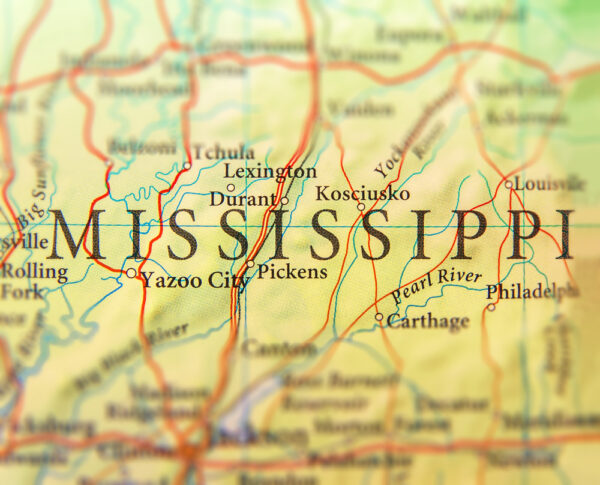
White v. Mississippi State Board of Elections
District lines used to elect Mississippi鈥檚 Supreme Court have gone unchanged for more than 35 years. We鈥檙e suing because the current lines crack the Mississippi Delta and dilute the voting strength of Black Mississippians in state Supreme Court elections, in violation of the Voting Rights Act.
Court Case
Dec 2025

National Security
Human Rights
FOIA Case Seeking the Trump Administration鈥檚 Legal Justification for Deadly Boat Strikes
The Department of Justice鈥檚 Office of Legal Counsel (鈥淥LC鈥�) authored a legal opinion that reportedly claims to justify the Trump administration鈥檚 illegal lethal strikes on civilians in boats in the Caribbean Sea and eastern Pacific Ocean. Media reports indicate that, in addition to claiming that the strikes are lawful acts in an alleged 鈥渁rmed conflict鈥� with unspecified drug cartels, the OLC opinion also purports to immunize personnel who authorized or took part in the strikes from future criminal prosecution. Because the public deserves to know how our government is justifying these illegal strikes, and why they think the people who carried them out should not be held accountable, the ACLU is seeking immediate release of the OLC legal opinion and related documents pursuant to the Freedom of Information Act.
U.S. Supreme Court
Dec 2025
Immigrants' Rights
Barbara v. Donald J. Trump
U.S. Supreme Court
Nov 2025
Voting Rights
Racial Justice
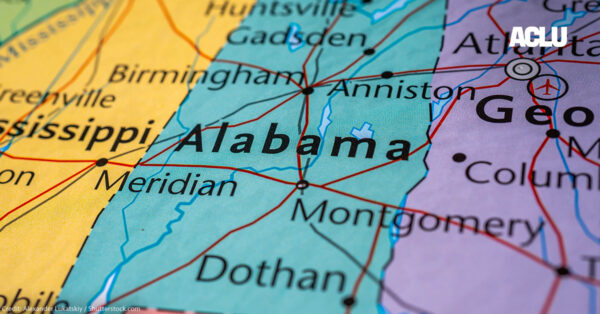
Allen v. Milligan
Whether Alabama鈥檚 congressional districts violate Section 2 of the Voting Rights Act because they discriminate against Black voters. We succeeded in winning a new map for 2024 elections which, for the first time, has two congressional district that provide Black voters a fair opportunity to elect candidates of their choosing despite multiple attempts by Alabama to stop us at the Supreme Court. Despite this win, Alabama is still defending its discriminatory map, and a trial was held in February 2025 to determine the map for the rest of the decade.
In May 2025, a federal court ruled that Alabama's 2023 congressional map both violates Section 2 of the Voting Rights Act and was enacted by the Alabama Legislature with racially discriminatory intent.
Washington, D.C.
Oct 2025

Voting Rights
League of Women Voters Education Fund v. Trump
On March 25, 2025, in a sweeping and unprecedented Executive Order, President Trump attempted to usurp the power to regulate federal elections from Congress and the States. Among other things, the Executive Order directs the Election Assistance Commission鈥攁n agency that Congress specifically established to be bipartisan and independent鈥攖o require voters to show a passport or other citizenship documentation in order to register to vote in federal elections. If implemented, the Executive Order would threaten the ability of millions of eligible Americans to register and vote and upend the administration of federal elections.
On behalf of leading voter registration organizations and advocacy organizations, the ACLU and co-counsel filed a lawsuit to block the Executive Order as an unconstitutional power grab.
U.S. Supreme Court
Oct 2025
Voting Rights
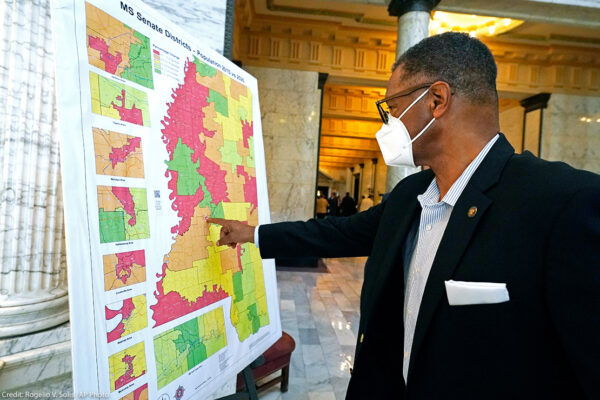
State Board of Election Commissioners v. Mississippi State Conference of the NAACP
Mississippi has a growing Black population, which is already the largest Black population percentage of any state in the country. Yet. Black Mississippians continue to be significantly under-represented in the state legislature, as Mississippi鈥檚 latest districting maps fail to reflect the reality of the state鈥檚 changing demographics. During the 2022 redistricting process, the Mississippi legislature refused to create any new districts where Black voters have a chance to elect their preferred representative. The current district lines therefore dilute the voting power of Black Mississippians and continue to deprive them of political representation that is responsive to their needs and concerns, including severe disparities in education and healthcare.
U.S. Supreme Court
Oct 2025

Voting Rights
Louisiana v. Callais (Callais v. Landry)
Whether the congressional map Louisiana adopted to cure a Voting Rights Act violation in Robinson v. Ardoin is itself unlawful as a gerrymander.
Missouri
Sep 2025
Voting Rights
Wise v. Missouri
In unprecedented fashion, the State of Missouri has redrawn the district lines used for electing members of Congress for a second time this decade. These new district lines are gerrymandered and will harm political representation for all Missourians, particularly Black residents in Kansas City, who have been divided along racial lines.
Louisiana
Aug 2025
Voting Rights
Nairne v. Landry
Nairne v. Landry poses a challenge under Section 2 of the Voting Rights Act of 1965 to Louisiana鈥檚 House and Senate legislative maps on behalf of plaintiff Black voters and Black voters across the state.
All Cases
1,671 Court Cases
Court Case
Feb 2025
Privacy & Technology
U.S. DOGE Service Access to Sensitive Agency Records Systems FOIA
There are serious privacy concerns raised by reports that the United States DOGE (鈥淒epartment of Government Efficiency鈥�) Service (鈥淯SDS鈥�) has gained access to federal agency systems, including those housing sensitive information like federal payment data, student loan data or federal employee records, and may be using artificial intelligence technology in analyzing them. The ACLU submitted a FOIA request to the Office of Personnel Management (OPM) and USDS to provide the public with information on what federal records the agencies have provided to or been asked for by the USDS and if sensitive information and key decision-making has been outsourced to unvetted technology.
Explore case
Court Case
Feb 2025
Privacy & Technology
U.S. DOGE Service Access to Sensitive Agency Records Systems FOIA
There are serious privacy concerns raised by reports that the United States DOGE (鈥淒epartment of Government Efficiency鈥�) Service (鈥淯SDS鈥�) has gained access to federal agency systems, including those housing sensitive information like federal payment data, student loan data or federal employee records, and may be using artificial intelligence technology in analyzing them. The ACLU submitted a FOIA request to the Office of Personnel Management (OPM) and USDS to provide the public with information on what federal records the agencies have provided to or been asked for by the USDS and if sensitive information and key decision-making has been outsourced to unvetted technology.
Court Case
Feb 2025
Immigrants' Rights
ACLU FOIA Suit for ICE鈥檚 Updated Solitary Confinement Policy
ICE鈥檚 use of special management units, or solitary confinement, has prompted active concern and attention from Congress, the media, and advocates. On Dec. 6, 2024, ICE announced that it had issued policy updates for the use of special management units (SMU), or solitary confinement cells, for detained immigrants. ICE, however, has not made a copy of the updated policy publicly available. We鈥檝e sued to obtain a copy of this policy to better defend immigrants subject to solitary confinement in detention.
Explore case
Court Case
Feb 2025
Immigrants' Rights
ACLU FOIA Suit for ICE鈥檚 Updated Solitary Confinement Policy
ICE鈥檚 use of special management units, or solitary confinement, has prompted active concern and attention from Congress, the media, and advocates. On Dec. 6, 2024, ICE announced that it had issued policy updates for the use of special management units (SMU), or solitary confinement cells, for detained immigrants. ICE, however, has not made a copy of the updated policy publicly available. We鈥檝e sued to obtain a copy of this policy to better defend immigrants subject to solitary confinement in detention.
Oregon Supreme Court
Feb 2025
Prisoners' Rights
Huskey v. Oregon Department of Corrections
This case in the Oregon Supreme Court centers on whether Article I, Section 41(3) of the Oregon Constitution, which provides that Oregon prisoners lack legally enforceable rights to prison jobs and training, bars prisoners from collecting damages relating to lost prison jobs and training caused by the alleged breach of a settlement agreement by prison officials. The ACLU鈥檚 State Supreme Court Initiative, alongside the ACLU of Oregon, filed an amicus brief arguing that plaintiff Arnold Huskey, an incarcerated individual whose identity was used in Department of Corrections training materials, is entitled to damages notwithstanding Article I, Section 41(3), because plaintiffs in contract disputes never have to show standalone legal rights to the damages they claim. Instead, they need only show that the damages were reasonably foreseeable consequences of the alleged breach of contract.
Explore case
Oregon Supreme Court
Feb 2025
Prisoners' Rights
Huskey v. Oregon Department of Corrections
This case in the Oregon Supreme Court centers on whether Article I, Section 41(3) of the Oregon Constitution, which provides that Oregon prisoners lack legally enforceable rights to prison jobs and training, bars prisoners from collecting damages relating to lost prison jobs and training caused by the alleged breach of a settlement agreement by prison officials. The ACLU鈥檚 State Supreme Court Initiative, alongside the ACLU of Oregon, filed an amicus brief arguing that plaintiff Arnold Huskey, an incarcerated individual whose identity was used in Department of Corrections training materials, is entitled to damages notwithstanding Article I, Section 41(3), because plaintiffs in contract disputes never have to show standalone legal rights to the damages they claim. Instead, they need only show that the damages were reasonably foreseeable consequences of the alleged breach of contract.
Court Case
Feb 2025
Immigrants' Rights
RAICES v. Noem
Immigrants鈥� rights advocates sued the Trump administration over the president鈥檚 recent proclamation aimed at completely shutting down asylum at the border, a move that puts thousands of lives at risk.
Explore case
Court Case
Feb 2025
Immigrants' Rights
RAICES v. Noem
Immigrants鈥� rights advocates sued the Trump administration over the president鈥檚 recent proclamation aimed at completely shutting down asylum at the border, a move that puts thousands of lives at risk.
Washington, D.C.
Feb 2025
Immigrants' Rights
Refugee and Immigrant Center for Education and Legal Services v. Kristi Noem
Explore case
Washington, D.C.
Feb 2025
Immigrants' Rights