Massachusetts
All Cases
22 Massachusetts Cases
Massachusetts
Jan 2026
National Security
Human Rights
Burnley v. U.S.: Demanding Accountability on Caribbean Boat Strikes
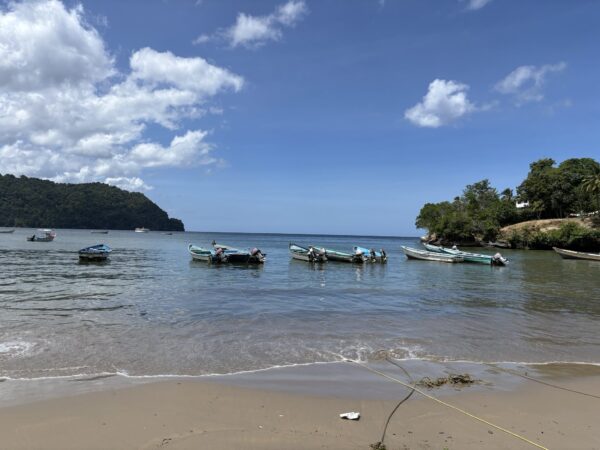
On October 14, 2025, the United States military carried out an illegal missile strike that killed Chad Joseph and Rishi Samaroo, two Trinidadian men who were traveling by boat from Venezuela to their homes in Las Cuevas, Trinidad and Tobago. The 老熟女午夜福利, the Center for Constitutional Rights, the 老熟女午夜福利 of Massachusetts, and Professor Jonathan Hafetz of Seton Hall Law School filed suit on behalf of Lenore Burnley, Mr. Joseph鈥檚 mother, and Sallycar Korasingh, Mr. Samaroo鈥檚 sister, seeking redress and accountability for these extrajudicial killings pursuant to the Death on the High Seas Act and the Alien Tort Statute.
Explore case
Massachusetts
Jan 2026
National Security
Human Rights
Burnley v. U.S.: Demanding Accountability on Caribbean Boat Strikes
On October 14, 2025, the United States military carried out an illegal missile strike that killed Chad Joseph and Rishi Samaroo, two Trinidadian men who were traveling by boat from Venezuela to their homes in Las Cuevas, Trinidad and Tobago. The 老熟女午夜福利, the Center for Constitutional Rights, the 老熟女午夜福利 of Massachusetts, and Professor Jonathan Hafetz of Seton Hall Law School filed suit on behalf of Lenore Burnley, Mr. Joseph鈥檚 mother, and Sallycar Korasingh, Mr. Samaroo鈥檚 sister, seeking redress and accountability for these extrajudicial killings pursuant to the Death on the High Seas Act and the Alien Tort Statute.
Massachusetts
Jan 2026
Voting Rights
California v. Trump (Amicus)
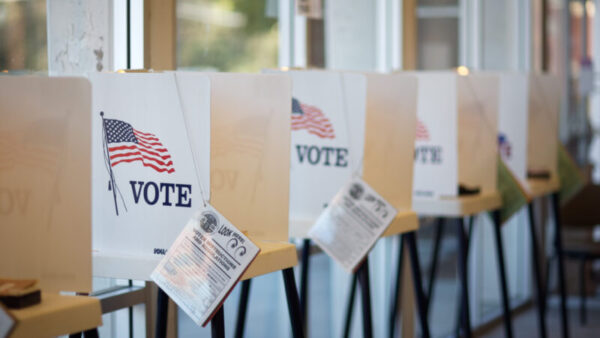
On March 25, 2025, in a sweeping and unprecedented Executive Order, President Trump attempted to usurp the power to regulate federal elections from Congress and the States. Among other things, the Executive Order directs the Election Assistance Commission鈥攁n agency that Congress specifically established to be bipartisan and independent鈥攖o require voters to show a passport or other citizenship documentation in order to register to vote in federal elections. If implemented, the Executive Order would threaten the ability of millions of eligible Americans to register and vote and upend the administration of federal elections.
Explore case
Massachusetts
Jan 2026
Voting Rights
California v. Trump (Amicus)
On March 25, 2025, in a sweeping and unprecedented Executive Order, President Trump attempted to usurp the power to regulate federal elections from Congress and the States. Among other things, the Executive Order directs the Election Assistance Commission鈥攁n agency that Congress specifically established to be bipartisan and independent鈥攖o require voters to show a passport or other citizenship documentation in order to register to vote in federal elections. If implemented, the Executive Order would threaten the ability of millions of eligible Americans to register and vote and upend the administration of federal elections.

Massachusetts Supreme Court
Dec 2025
Criminal Law Reform
Commonwealth v. Jose Arias
This case asks whether the stop, search, and arrest of an individual after a traffic stop was unconstitutional under the Massachusetts Declaration of Rights. The case arises from a remarkable set of facts: although motivated by a desire to search Mr. Arias鈥檚 car for drugs, the police initiated the stop based on a day-old alleged traffic infraction and then arrested Mr. Arias for allegedly neglecting to stop his car immediately when the police initiated the stop. The ACLU joined an amicus brief authored by the ACLU of Massachusetts and the law firm Proskauer Rose, which argues that the police actions in this case were unconstitutional for three reasons. First, pretextual traffic stops, such as this one, violate the Massachusetts Declaration of Rights. Second, arrests for misdemeanors not involving breaches of the peace also violate the Massachusetts Declaration of Rights. Third, the statute prohibiting drivers from neglecting to stop is unconstitutionally vague as applied to this case.
Explore case
Massachusetts Supreme Court
Dec 2025
Criminal Law Reform
Commonwealth v. Jose Arias
This case asks whether the stop, search, and arrest of an individual after a traffic stop was unconstitutional under the Massachusetts Declaration of Rights. The case arises from a remarkable set of facts: although motivated by a desire to search Mr. Arias鈥檚 car for drugs, the police initiated the stop based on a day-old alleged traffic infraction and then arrested Mr. Arias for allegedly neglecting to stop his car immediately when the police initiated the stop. The ACLU joined an amicus brief authored by the ACLU of Massachusetts and the law firm Proskauer Rose, which argues that the police actions in this case were unconstitutional for three reasons. First, pretextual traffic stops, such as this one, violate the Massachusetts Declaration of Rights. Second, arrests for misdemeanors not involving breaches of the peace also violate the Massachusetts Declaration of Rights. Third, the statute prohibiting drivers from neglecting to stop is unconstitutionally vague as applied to this case.
Massachusetts
Dec 2025
Voting Rights
United States v. Galvin
The Department of Justice (DOJ) sued the Massachusetts Secretary of State Galvin, seeking private, confidential voter data. DOJ鈥檚 efforts appear to be part of an effort to build a national voter database without congressional authorization and to improperly question the validity of state voter rolls.
Explore case
Massachusetts
Dec 2025
Voting Rights
United States v. Galvin
The Department of Justice (DOJ) sued the Massachusetts Secretary of State Galvin, seeking private, confidential voter data. DOJ鈥檚 efforts appear to be part of an effort to build a national voter database without congressional authorization and to improperly question the validity of state voter rolls.
Massachusetts Supreme Court
Nov 2025
Criminal Law Reform
Committee for Public Counsel Services v. Middlesex and Suffolk District Courts
For more than two decades, criminal defendants in Massachusetts have experienced a recurring counsel crisis, with defendants periodically going unrepresented due to low attorney compensation rates. Despite many opportunities, the Legislature has failed to raise rates high enough to remedy the constitutional violation. At present, the compensation rate for district court cases is $75 per hour. Consequently, in a case brought by the Committee for Public Counsel Services鈥攖he Massachusetts public defender agency鈥攖he ACLU of Massachusetts and the ACLU鈥檚 State Supreme Court Initiative filed an amicus brief urging the Court to hold that the statute setting attorney compensation rates is unconstitutional. This case has important implications for the right to counsel and access to justice in Massachusetts.
Explore case
Massachusetts Supreme Court
Nov 2025
Criminal Law Reform
Committee for Public Counsel Services v. Middlesex and Suffolk District Courts
For more than two decades, criminal defendants in Massachusetts have experienced a recurring counsel crisis, with defendants periodically going unrepresented due to low attorney compensation rates. Despite many opportunities, the Legislature has failed to raise rates high enough to remedy the constitutional violation. At present, the compensation rate for district court cases is $75 per hour. Consequently, in a case brought by the Committee for Public Counsel Services鈥攖he Massachusetts public defender agency鈥攖he ACLU of Massachusetts and the ACLU鈥檚 State Supreme Court Initiative filed an amicus brief urging the Court to hold that the statute setting attorney compensation rates is unconstitutional. This case has important implications for the right to counsel and access to justice in Massachusetts.