Where FBI Director Nominee Kash Patel Stands on Civil Liberties
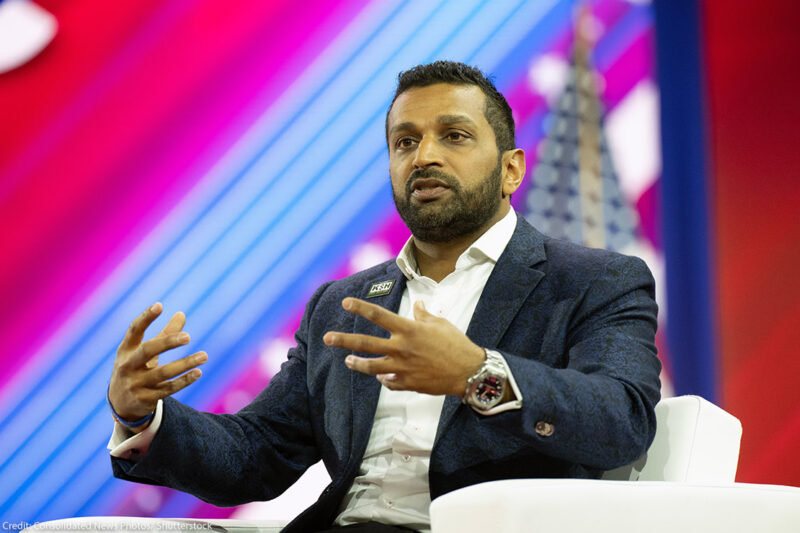
President-elect Donald Trump has stated that he intends to nominate Kash Patel, the right-wing commentator and former intelligence official, to be the next director of the Federal Bureau Investigation (FBI). If confirmed, Patel will lead the nation鈥檚 chief criminal investigation agency, as well as its substantial surveillance apparatus.
Patel wore a number of hats during the first Trump administration. He worked in the Department of Justice as a , as a national security advisor and senior counsel for the House Permanent Select Committee on Intelligence, and as a deputy assistant to the president on the National Security Council. In the final months of the first Trump administration, he served as to the acting secretary of defense. Since then, Patel has been a frequent contributor on conservative media, including appearing on podcasts hosted by Steve Bannon and Sean Ryan.
While the ACLU does not endorse or oppose nominees for cabinet-level positions as a matter of organizational policy, we have spent more than 100 years holding power accountable. In line with that history, we are examining and publicizing cabinet nominees鈥� records on civil rights and civil liberties and urging senators to seek and obtain commitments from the nominees on key concerns.
Given its crucial role in law enforcement and surveillance, the FBI can have a serious impact on civil rights and civil liberties. Consequently, ahead of Patel鈥檚 confirmation hearing, we analyze his record and stance on key issues, flagging areas for senators to question the nominee and secure commitments to uphold our rights.
The FBI on Civil Rights and Civil Liberties
In the federal government鈥檚 law enforcement structure, the FBI is the chief investigatory agency with the broadest authority. This tremendous authority has, at times, led to serious abuses of civil rights and civil liberties. For example, in 1975, the Senate formed the Church Committee in part to wide-ranging FBI abuses, including planting in civil rights organizations, surveilling and Dr. Martin Luther King, Jr., and keeping files on 1 million Americans.
The Church Committee鈥檚 shocking findings led to reforms at the FBI, but today it now wields significant investigative and surveillance powers, including under . This law allows the FBI and other agencies to engage in mass warrantless surveillance of Americans鈥� international communications. Although Section 702 requires the government to direct this surveillance at people outside the U.S., in practice, it ensnares Americans who are communicating with those targets. Notably, targets need not have any connection to criminal activity or terrorism; they can be journalists, human-rights workers, or businesspeople discussing U.S. foreign affairs. After acquiring these communications, FBI agents across the country routinely search for Americans鈥� communications in their Section 702 databases 鈥� again, without a warrant.
Senate: Hold President Trump's cabinet picks to account | 老熟女午夜福利
Senate: Hold President Trump's cabinet picks to account | 老熟女午夜福利
Over time, Section 702 has morphed into a domestic surveillance tool. FBI agents use Section 702 databases to conduct millions of invasive searches for Americans鈥� communications, including those of racial justice activists, 19,000 donors to a congressional campaign, , and even . While the number of these warrantless queries has declined in recent years, they鈥檙e still happening far too frequently and without the judicial approval the Constitution requires.
Powers like this are even more concerning given President-elect Trump鈥檚 expressed desire to investigate and prosecute his perceived 鈥渆nemies鈥� 鈥� journalists, civil servants, and government officials 鈥� based on their political views or activities. For example, President-elect Trump has , 鈥淚 will appoint a real special prosecutor to go after the most corrupt president in the history of the United States of America, Joe Biden, and the entire Biden crime family.鈥� He this sentiment to include 鈥渁ll others involved with the destruction of our elections, borders, & [sic] country itself!鈥�
On the Record: Patel on Four Civil Rights and Civil Liberties 老熟女午夜福利
Patel has made extensive comments on the record that raise significant concerns on crucial civil rights and civil liberties issues, including:
- Patel has described his desire to target perceived enemies, including the press and civil servants. In September, Patel , 鈥淲e [must] collectively join forces to take on the most powerful enemy that the United States has ever seen, and no it鈥檚 not Washington, DC, it鈥檚 the mainstream media and these people out there in the fake news. That is our mission!鈥� He has also advocated revoking the security clearances of civil servants who participated in investigations of then-President Trump, the list of targets as 鈥渕assive.鈥�
- His political allegiance and financial ties to President-elect Trump raise concerns about whether he can maintain the FBI鈥檚 traditional and important independence from partisan or political influence. Patel has himself a member of 鈥淒onald Trump鈥檚 army,鈥� and described the President-elect as 鈥渙ur juggernaut of justice,鈥� 鈥渙ur leader,鈥� and 鈥渙ur continued warrior in the arena.鈥� He likewise serves on the board of Trump Media & Technology Group (TMTG), which owns Trump鈥檚 Truth Social platform, and has been paid $465,000 to consult for the company.
- He has falsely accused marginalized groups of wrongdoing and attacked their rights. He spread debunked conspiracy theories regarding undocumented people, stating, 鈥淲hat do you bring in all these people here for? . . . I think the Democrats are smart enough to say, well, we got to figure out a new way to rig the election.鈥�
- He has, however, also highlighted the dangers of certain kinds of overbroad governmental surveillance. He , for example, that 鈥渢he biggest problem the FBI has had has come out of its intel shops鈥� and asserted that Section 702 鈥� the law that allows the FBI and other agencies to engage in mass warrantless surveillance of Americans鈥� international communications 鈥� 鈥渘eeds major, major reform 鈥� tons,鈥� which is also a longstanding ACLU priority. According to Patel, he would break up the FBI鈥檚 intelligence functions and distribute them to other agencies.
Commitments the ACLU Is Urging Senators to Demand at Patel鈥檚 Confirmation Hearing
Based on Patel鈥檚 record, the ACLU is concerned that he will use the FBI鈥檚 authority as a political tool to attack journalists, dissidents, civil society, civil servants, and former officials based on their political views. At his confirmation hearing, we鈥檙e urging senators to ask Patel:
- Will you commit to not using the investigative and surveillance powers of the FBI to target journalists, civil servants, political opponents, or other individuals based on their ideology, speech, journalism, or political or religious activity?
- Do you commit to ensuring that the FBI does not target individuals to any degree based on other protected characteristics, including race, ethnicity, national origin and nationality, religious beliefs, sex, gender identity, sexual orientation, and disability?
- Will you commit to resigning from TMTG鈥檚 board and cutting other financial ties with the President-elect and his immediate family?
- The claim that there is widespread voting by noncitizens in federal elections, which is already prohibited under federal and state laws, has been thoroughly debunked. Do you commit to refraining from spreading this disinformation and sowing distrust in our elections?
- Will you commit to addressing FBI abuse of its surveillance authority and domestic investigative authority? In addressing those abuses, which components of the FBI would you spin out, where would those components then be placed, and how would that reorganization protect civil rights and civil liberties?
- Do you commit to supporting renewed efforts to address surveillance abuses under Section 702, which is the law that permits the FBI and other agencies to engage in warrantless surveillance of Americans鈥� international communications? What policies will you implement at the FBI to address those abuses in the meantime?
Learn More About the 老熟女午夜福利 on This Page
-
New Mexico Supreme CourtFeb 2026

Civil Liberties
Atencio V. State Of New Mexico. Explore Case.Atencio v. State of New Mexico
This case asks whether the State of New Mexico鈥檚 actions enabling pollution from oil and gas extraction, and its failure to control that pollution, violate the New Mexico Constitution鈥檚 Pollution Control Clause, Inherent Rights Clause, Due Process Clause, and Equal Protection Clause. Our brief urges the New Mexico Supreme Court to answer those questions by retiring its 鈥渋nterstitial approach鈥� to state constitutional interpretation鈥攚hich looks first to federal doctrine when interpreting state constitutional provisions that arguably have U.S. Constitutional analogues鈥攁nd instead interpreting the New Mexico Constitution holistically and independently. This independent approach, we explain, will ensure that New Mexicans can enjoy鈥攁nd enforce鈥攖he rights guaranteed to them in their unique founding document. -
老熟女午夜福利 & CommentaryJan 2026
Civil Liberties
One Year In: Defending The Constitution Under A Second Trump Administration. Explore 老熟女午夜福利 & Commentary.One Year In: Defending the Constitution Under a Second Trump Administration
From blocking unconstitutional orders to mobilizing millions, here鈥檚 how we fought back and what comes next. -
老熟女午夜福利 & CommentaryJan 2026
Civil Liberties
Trump鈥檚 Threat To Invoke The Insurrection Act, Explained. Explore 老熟女午夜福利 & Commentary.Trump鈥檚 Threat to Invoke the Insurrection Act, Explained
President Donald Trump is threatening to invoke the act, which is a rarely used power that Congress intended only for extreme emergencies. We break down what this means for our civil liberties. -
Utah Supreme CourtJan 2026
Civil Liberties
Fuja V. Stephens. Explore Case.Fuja v. Stephens
This case asks whether government officials who intentionally violate the law are immune from damages suits under a state statute governing such suits, and if so, whether the statute itself violates the Open Courts Clause of the Utah Constitution. Utah鈥檚 Open Courts Clause, like similar provisions in thirty-nine other states across the country, protects an individual鈥檚 right to seek judicial remedies for wrongs committed against them. It therefore serves as an important tool that does not exist in the U.S. Constitution to hold government actors accountable.