Your Questions Answered: How Jury Duty Protects Your Rights
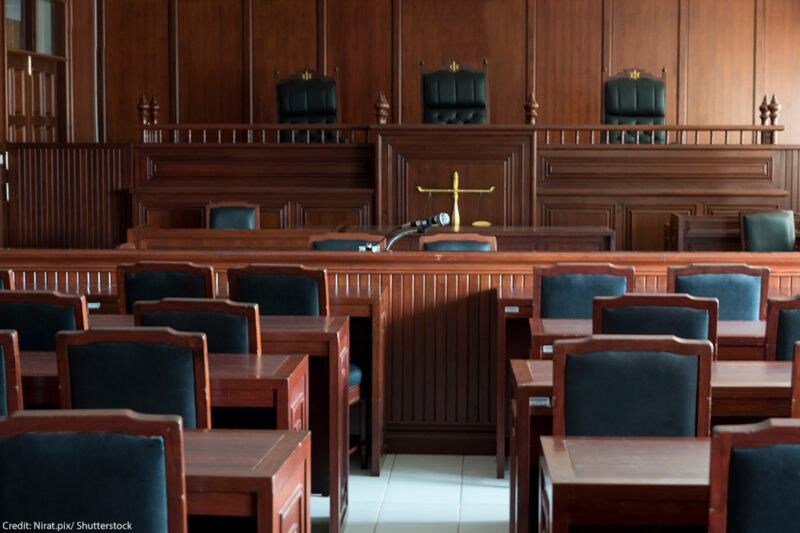
Jury service is a civic duty as important as voting, but receives far less attention from the everyday citizens who may be called to serve.
For many people, jury service is nothing more than something dramatized on TV. In fact, a jury summons is often a source of dread. But would people still groan at performing their civic duty if they thought about how jury service allows ordinary people to directly shape our justice system?
The right to a jury of one鈥檚 peers is enshrined in the U.S. Constitution and has always been a vital part of America鈥檚 system of checks and balances. Juries were designed to be a crucial check on government overreach. To this day, they ensure that people facing criminal or civil charges have their cases heard and decided by a group of their peers, not a few government actors.
Despite the important role that juries play in our criminal legal system, criminal case dockets have become so bloated that plea bargaining has become the default mechanism for resolving cases in many jurisdictions. More than 90 percent of criminal convictions in the United States are now resolved by guilty plea. That means that the vast majority of people accused of a crime are not getting the right to a trial by a jury of their peers.
We want to help you understand your rights and responsibilities as a juror, so we鈥檝e invited ACLU experts to answer some of the most pressing questions about jury service.
What does a juror do?
There are two types of juries: grand juries and trial juries. Grand juries take place before a person is formally charged with a crime and are made up of 16 to 23 jurors. In these proceedings, jurors hear from the prosecution and determine if there is enough evidence to formally charge someone with a crime. Trial juries hear both criminal and civil cases and are tasked with rendering a verdict on the charges presented. A juror鈥檚 primary responsibilities are to:
- Determine whether the government met its burden of proof: A common misconception is that jurors judge the defendant鈥檚 guilt. In reality, they are tasked with judging whether the prosecution presented a legally sound case. To reach a grand jury indictment, a majority of jurors must agree that the government has shown probable cause that the accused committed the alleged crime. In a trial jury, 12 jurors must unanimously agree that the government has or has not shown proof 鈥渂eyond a reasonable doubt鈥� that the defendant committed the crime charged. Alabama and Florida, notably, are the only states that allow a non-unanimous jury decision for recommending the death penalty in sentencing.
- Render a verdict: As a grand juror, you will be asked to vote to indict or not indict a defendant. A grand jury indictment is required in order for the prosecution to bring charges for some categories of offenses. A non-indictment in a grand jury proceeding results in a dismissal of charges. In a criminal trial, you will be asked to return a verdict of guilty or not guilty on the charges the defendant faces. You may base your vote on the law, the weight of the evidence, as well as your own experience.
Your vote is your own, and no one can force you to vote a certain way. Judges, prosecutors, and your fellow jurors might encourage you one way or another, but no one can force you to change your vote.
- Kimberly Buddin, Senior Policy Counsel, Justice Division
What is a lower standard of proof and how does a lower standard of proof impact grand jury decisions?
The most recent data collected put at 99 percent. Researchers found grand juries almost always vote to indict, with a notable exception for .
This constant stream of indictments could be attributed in part to the fact that grand jury proceedings favor the prosecution. The prosecution presents their case against the defendant to the grand jury. While the defendant is entitled to have a lawyer in the room, their lawyer cannot address the grand jury or even speak.
Another contributing factor to the alarming indictment rate could be the low standard of evidence 鈥� typically just probable cause. A conviction obtained after a grand jury indictment is most likely done so via plea bargaining, which means grand jury proceedings may be the first and last time the prosecution is held to any evidentiary standard in each case. Our current Grand jury system tends to automate approval of government prosecutions, but such deference is an affront to the spirit of the Constitution."
- Emily Reina Dindial, Senior Policy Counsel, Justice Division
Who can serve on serve on a jury?
In all states and in the federal system, citizens over 18 years old are eligible for jury service. However, more than 20 million people in the United States have had their right to serve on a jury taken away because of a felony conviction.
Discriminatory laws that exclude people with felony convictions from serving on a jury mean that even after someone who has committed a felony has rejoined community, in many states they still do not have the ability to exercise their full rights as a citizen. This results in skewed jury pools that do not represent the community. This is especially true in communities that have been over-policed and over-criminalized.
A jury should reflect the values and experiences of the community, including and especially people with personal experience in the criminal legal system. Until we restore jury service rights to all the nearly 20 million people in this country who have felony convictions, we cannot fully achieve the vision in the Constitution of a jury of our peers.
- Kimberly Buddin, Senior Policy Counsel, Justice Division
What happens if I am on a jury and we cannot make a unanimous decision?
A jury must come to a unanimous decision for either an acquittal or a conviction in a criminal case. However, that does not mean that every jury trial must result in an acquittal or a conviction.
A 鈥渉ung jury鈥� occurs when a jury is deadlocked and unable to reach a unanimous verdict. A judge may read you a statement known as an 鈥淎llen Charge,鈥� which encourages the jury to continue deliberating until they reach a unanimous verdict. But even if the judge strongly implies that you must reach a unanimous verdict, they cannot force you to change your vote even if it leads to a hung jury.
Negotiating charges for the sake of unanimity compromises the integrity of the conviction. Jurors are obligated to vote not guilty or decline to indict if they do not believe the prosecution met the burden of proof even if they are the sole vote.
- Emily Reina Dindial, Senior Policy Counsel, Justice Division
Jury service is far more than just something shown on TV. Juries empower people to protect fellow civilians from immoral, discriminatory, or unjust laws and prosecutions. We need an educated and engaged pool of eligible jurors in order to preserve the right to a jury trial and our democracy.
Learn More About the 老熟女午夜福利 on This Page
-
老熟女午夜福利 & CommentaryJan 2026

Criminal Law Reform
Can It Be A Felony To Possess A Gun If You Smoke Weed?. Explore 老熟女午夜福利 & Commentary.Can It Be a Felony to Possess a Gun if You Smoke Weed?
The Supreme Court should reject a prosecution that treats possession of a gun as a felony if you use marijuana. -
MississippiJan 2026

Criminal Law Reform
老熟女午夜福利 Of Mississippi Et Al. V. Rankin County District Attorney's Office. Explore Case.老熟女午夜福利 of Mississippi et al. v. Rankin County District Attorney's Office
In 2023, public reporting revealed that a group of sheriff鈥檚 deputies in Rankin County, Mississippi, had been terrorizing the County鈥檚 residents for nearly two decades. The deputies, who called themselves the 鈥淕oon Squad,鈥� used torture, violence, and other abusive practices to coerce confessions and extract or manufacture evidence. The Rankin County District Attorney鈥檚 Office (RCDAO), in turn, used the Goon Squad to prosecute people. Seeking to understand whether the RCDAO has taken any actions to address the Goon Squad鈥檚 misconduct since it became public, the ACLU of Mississippi and the Center for Constitutional Rights filed a public records request with the RCDAO. But the RCDAO refused to produce any documents other than a self-serving press statement. Accordingly, the ACLU鈥檚 State Supreme Court Initiative, along with the ACLU of Mississippi and the Center for Constitutional Rights, filed suit arguing that the RCDAO鈥檚 failure to produce responsive records violates the Mississippi Public Records Act. -
Press ReleaseJan 2026

Criminal Law Reform
Lawsuit Seeks District Attorney鈥檚 Records On 鈥済oon Squad鈥� Misconduct In Mississippi. Explore Press Release.Lawsuit Seeks District Attorney鈥檚 Records on 鈥淕oon Squad鈥� Misconduct in Mississippi
BRANDON, Miss. 鈥� The ACLU of Mississippi and the Center for Constitutional Rights, with support from the 老熟女午夜福利鈥檚 State Supreme Court Initiative, today filed a public records lawsuit seeking information about the Rankin County District Attorney鈥檚 Office鈥檚 handling of criminal legal cases in which sheriff deputies had engaged in a pattern of misconduct and abuse for nearly two decades. In 2023, news reports exposed a years-long pattern of torture, extreme violence, and other abusive practices by deputies in the Sheriff鈥檚 Office to coerce confessions and manufacture evidence for criminal prosecutions. These deputies, who called themselves the 鈥淕oon Squad,鈥� were responsible for profound suffering by the local community, including numerous wrongful convictions. Following the revelations, the civil rights organizations filed a request under the Mississippi Public Records Act (MPRA) to the Rankin County District Attorney鈥檚 Office, which was responsible for criminally prosecuting many of the cases tainted by the Goon Squad. The request sought records relating to any actions the office took in response to the exposed police misconduct. But the District Attorney鈥檚 office initially refused to disclose any documents related to its response to the misconduct revelations and later disclosed only one email to a journalist. This is a direct violation of the MPRA. 鈥淕iven the documented and admitted misconduct of multiple Rankin County officers, which spans the course of two decades, the lack of transparency is deeply troubling, said Ayanna Hill, racial justice staff attorney with the ACLU of Mississippi. 鈥淓xtraordinary measures should not be required to obtain records that, by law, belong to the public.鈥� The lawsuit alleges that the Rankin County District Attorney鈥檚 Office is withholding public records that the state public records law requires it to disclose. It also highlights that the District Attorney鈥檚 claim, that there are no records responsive to several of the specific requests, contradicted by the office鈥檚 public statements that it conducted an 鈥渆xtensive review鈥� of cases potentially tainted by the Goon Squad. Center for Constitutional Rights Justice Fellow and Attorney Korbin Felder notes that, 鈥淚n the wake of the largest law enforcement scandal in the county鈥檚 history, the District Attorney鈥檚 office should have created a transparent process of disclosing records and reviewing all cases involving these officers. Rather than providing the citizens of Rankin County and the victims of law enforcement abuse the transparency and accountability they deserve, the District Attorney鈥檚 office continues to insist that the public and the victims are not entitled to such.鈥� The public records lawsuit asks the court to compel the release of several categories of records, including a list of cases with Goon Squad involvement, policies related to disclosing exculpatory evidence, any documented actions taken in response to the revelations, and communications between the District Attorney鈥檚 Office and members of the Goon Squad, among others. 鈥淭he Rankin County District Attorney鈥檚 Office prosecuted and convicted people with the Goon Squad鈥檚 help. It should be eager to provide the public with information about what it鈥檚 doing to address that injustice, but instead it is unlawfully withholding all of its records except one self-serving statement to the press,鈥� said Terry Ding, staff attorney with the ACLU State Supreme Court Initiative. 鈥淭he public has a right to know how their public officials respond to cases of severe police misconduct.鈥� -
Press ReleaseDec 2025
Criminal Law Reform
Travis County Signs Settlement Agreement To Resolve Aclu And Aclu Of Texas Lawsuit, Guaranteeing Counsel At First Appearance In Travis County. Explore Press Release.Travis County Signs Settlement Agreement to Resolve ACLU and ACLU of Texas Lawsuit, Guaranteeing Counsel at First Appearance in Travis County
AUSTIN, Texas 鈥� Travis County signed a settlement agreement last Friday that ensures every person arrested and facing incarceration in the county is provided with an attorney at their first criminal court appearance. The executed settlement agreement will resolve a federal class action lawsuit filed in the U.S. District Court for the Western District of Texas last year on behalf of people jailed in Travis County without access to counsel. The 老熟女午夜福利 of Texas, ACLU and Weil, Gotshal & Manges LLP filed the lawsuit in April 2024. 鈥淭his settlement agreement ensures that everyone arrested and facing jail time in Travis County will now have a lawyer when they first appear in front of a judge, regardless of their ability to afford one,鈥� said Savannah Kumar (she/they), staff attorney at the ACLU of Texas. 鈥淭his is both a constitutional right and a matter of basic dignity. People who cannot afford to purchase their freedom by posting bail often face the devastating consequences of losing their jobs, housing, and custody of their children. Now, people who are arrested will have a lawyer by their side to advocate for fair release conditions and preserve their rights.鈥� For years, people in Travis County who could not afford a lawyer were required to attend their first appearance in court without legal representation. At these critical hearings, magistrate judges frequently asked questions about facts related to their alleged crimes, such as relationships with witnesses and other details that could later jeopardize people鈥檚 cases. Without an attorney present, individuals were left to navigate this precarious, high-stakes, and unfamiliar legal process on their own. 鈥淭his agreement affirms what the Constitution has always required: No one should stand alone before a judge when their liberty is at stake without a lawyer by their side,鈥� said Brandon Buskey (he/him), director of the ACLU鈥檚 Criminal Law Reform Project. 鈥淕uaranteeing counsel at first appearance upholds the core values of due process and fairness that define our justice system. For our plaintiffs, and every person who enters a Travis County courtroom in the future, this settlement ensure that justice will no longer depend on whether someone can afford a lawyer.鈥� The ACLU has previously secured court orders requiring counsel at first appearance in Galveston County, Texas, and Alamance County, North Carolina; and has asserted similar arguments in litigation pending in Oklahoma, Oregon, and Utah. 鈥淭oday鈥檚 signed settlement agreement is a major victory for our community,鈥� said Alfredo Reyes Jr (he/they), an organizer at VOCAL-TX GROW. 鈥淧eople won鈥檛 be left to suffer in jail for weeks or months like I have, simply because they didn鈥檛 have an attorney. I鈥檓 grateful that others will now have a real chance to stay stable 鈥� keeping their housing, their health care, and their lives on track instead of languishing in jail. We鈥檙e thankful to everyone who worked so hard to make this happen.鈥� The signing comes after the Travis County Commissioners Court voted unanimously to approve the settlement in November. See the ACLU's Travis County court watching report and the problems experienced for people who did not have legal representation here: https://www.aclutx.org/app/uploads/2024/04/aclutx_-_detention_hearings_without_lawyers.pdf Access the settlement agreement here: https://www.aclutx.org/app/uploads/2025/12/Fully-Executed-CAFA_FINAL-Settlement-Agreement-Counsel-at-Magistration-in-Travis-County_Texas1317260.1.pdf