
Lives First, Profits Later: How To Close the Global Vaccine Gap
June 8, 2021
In the U.S., it’s easy to think we’re in the final chapter of this global pandemic. Baseball stadiums have replaced cardboard cutouts with screaming fans, and the aroma of fresh popcorn is wafting once again from movie theaters’ open doors. As of this recording, more than 60% of US adults have now received at least one dose of the vaccine, and unused doses are available to anyone over the age of 12.
But the U.S. is, in many ways, an outlier. The entire continent of Africa accounts for 1% of the world’s vaccine administrations, and countries in Asia and South America still lack meaningful access to vaccines. Added to this, variants have made COVID-19 more contagious and, in some cases, more deadly. This is the global vaccine gap.
The global vaccine gap is both a human rights and a racial justice issue. Many of the communities left vulnerable are communities of color. The scale of the problem has united activists and organizations from around the world, including at the ACLU, to identify solutions and fast.
For many of the human rights activists and experts, the urgency is part of their lived experience on the ground. This episode, we’ll hear some of their stories and learn from one of the ACLU’s human rights experts what needs to be done.
Special thanks to the International Network for Civil Liberties Organizations (INCLO) for helping make this podcast happen, especially Colin Gonsalves, Nersan Govender, Vivian Newman, and Lucila Santos.
To support our INCLO partners featured in this episode, please see below.
Human Rights Law Network in India: .
Legal ÀÏÊìÅ®ÎçÒ¹¸£Àû Centre in South Africa:
Dejusticia in Colombia:
INCLO:
This Episode Covers the Following ÀÏÊìÅ®ÎçÒ¹¸£Àû
-
Press ReleaseFeb 2026

Human Rights
Aclu Calls On U.n. To Investigate Trump Administration's Gross Violations Of Human Rights In Minnesota. Explore Press Release.ACLU Calls On U.N. to Investigate Trump Administration's Gross Violations of Human Rights in Minnesota
WASHINGTON — The ÀÏÊìÅ®ÎçÒ¹¸£Àû and the ACLU of Minnesota sent an urgent submission late last night to the United Nations Committee on the Elimination of Racial Discrimination (CERD), requesting the committee to use its early warning and urgent action procedure in response to the human rights crisis following the Trump administration's deployment of federal forces in Minneapolis and the St. Paul metropolitan area. The submission details how federal agents have ignored basic human rights in their enforcement activity against Minnesotans, especially targeting Somali and Latino communities. The ACLU and ACLU of Minnesota call on CERD to issue a decision under its early warning and urgent actions procedures to intervene and investigate the U.S.’s grave violations of its human rights obligations. “The Trump administration’s egregious crackdown in Minnesota is not only flouting the Constitution but also United States international human rights obligations that prohibit the use of racial and ethnic profiling, extra-judicial killings and unlawful use of force against protesters and observers,â€� said Jamil Dakwar, director the Human Rights Program at the ÀÏÊìÅ®ÎçÒ¹¸£Àû. “We are calling on the United Nations to hold the U.S. government accountable for its blatant violations of international law and to officially report on its disregard for their human rights treaty obligations.â€� The submission underscores how ICE’s unlawful and unconstitutional stops and arrests of Minnesotans on the basis of race, ethnicity, and national origin represent flagrant violations of the freedoms and rights enshrined in the International Convention on the Elimination of All Forms of Racial Discrimination (ICERD) — guarantees that the United States is legally bound to uphold and protect at federal, state and local levels as a state party to the treaty since 1994. “The Trump administration’s ongoing immigration enforcement operations in Minnesota are being carried out by thousands of masked federal agents in military gear who are ignoring basic constitutional and human rights of Minnesotans,â€� said Teresa Nelson, legal director of the ACLU of Minnesota. “Their targeting of our Somali and Latino communities threatens Minnesotans’ most fundamental rights, and it has spread fear among immigrant communities and neighborhoods.â€� For more information about ICERD and the Committee’s Early Warning and Urgent Action procedures here. -
MassachusettsJan 2026
National Security
Human Rights
Burnley V. U.s.: Demanding Accountability On Caribbean Boat Strikes. Explore Case.Burnley v. U.S.: Demanding Accountability on Caribbean Boat Strikes
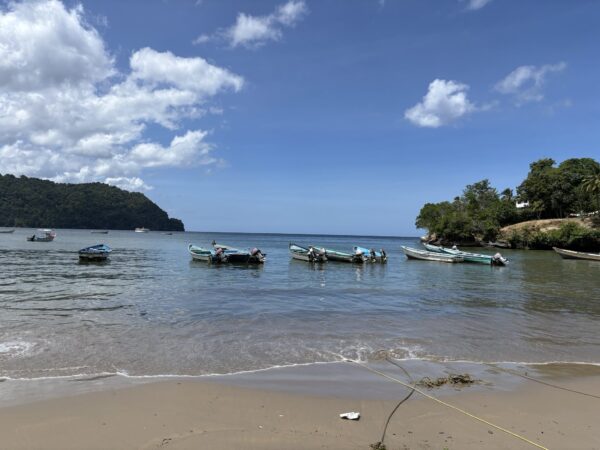
On October 14, 2025, the United States military carried out an illegal missile strike that killed Chad Joseph and Rishi Samaroo, two Trinidadian men who were traveling by boat from Venezuela to their homes in Las Cuevas, Trinidad and Tobago. The ÀÏÊìÅ®ÎçÒ¹¸£Àû, the Center for Constitutional Rights, the ÀÏÊìÅ®ÎçÒ¹¸£Àû of Massachusetts, and Professor Jonathan Hafetz of Seton Hall Law School filed suit on behalf of Lenore Burnley, Mr. Joseph’s mother, and Sallycar Korasingh, Mr. Samaroo’s sister, seeking redress and accountability for these extrajudicial killings pursuant to the Death on the High Seas Act and the Alien Tort Statute. -
Press ReleaseJan 2026
National Security
Human Rights
Families Of Trinidadian Men Killed In Illegal Boat Strike Sue Trump Administration. Explore Press Release.Families of Trinidadian Men Killed in Illegal Boat Strike Sue Trump Administration
BOSTON, MA – Today, family members of two Trinidadian men killed in a U.S. missile strike in October are suing the U.S. government for wrongful death and extrajudicial killing. Chad Joseph, 26, and Rishi Samaroo, 41, were killed in one of the 36 strikes the Trump administration has launched against civilian boats in the Caribbean and Pacific Ocean. At least 125 people have been killed in these strikes since September 2025. On October 14, Mr. Joseph and Mr. Samaroo were returning from Venezuela to their homes in Las Cuevas, Trinidad and Tobago when a missile struck their boat. Four other people also died in the strike. The plaintiffs are Lenore Burnley, Mr. Joseph’s mother, and Sallycar Korasingh, Mr. Samaroo’s sister. They bring this case on behalf of surviving members of Mr. Joseph’s and Mr. Samaroo’s families. “Chad was a loving and caring son who was always there for me, for his wife and children, and for our whole family. I miss him terribly. We all do,â€� said Mr. Joseph’s mother, Lenore Burnley. “We know this lawsuit won’t bring Chad back to us, but we’re trusting God to carry us through this, and we hope that speaking out will help get us some truth and closure.â€� They bring their claims under two federal statutes: the Death on the High Seas Act, a law that allows family members to sue for wrongful deaths occurring on the high seas, and the Alien Tort Statute, which allows foreign citizens to sue in U.S. federal courts for violations of well-recognized human rights norms. “Rishi used to call our family almost every day, and then one day he disappeared, and we never heard from him again,â€� said Sallycar Korasingh, Rishi Samaroo’s sister. “Rishi was a hardworking man who paid his debt to society and was just trying to get back on his feet again and to make a decent living in Venezuela to help provide for his family. If the U.S. government believed Rishi had done anything wrong, it should have arrested, charged, and detained him, not murdered him. They must be held accountable.â€� In the complaint filed today, lawyers from the ÀÏÊìÅ®ÎçÒ¹¸£Àû, the Center for Constitutional Rights, Professor Jonathan Hafetz of Seton Hall Law School, and the ACLU of Massachusetts detail why the boat strikes are “manifestly unlawful.â€� The U.S. is not engaged in an armed conflict, as the government has implausibly claimed, and even during wartime, these strikes would still be illegal under the laws of war, which constrain the indiscriminate and direct use of force against civilians and civilian vessels. “The Trump administration’s boat strikes are the heinous acts of people who claim they can abuse their power with impunity around the world,â€� said Brett Max Kaufman, senior counsel at the ACLU. “In seeking justice for the senseless killing of their loved ones, our clients are bravely demanding accountability for their devastating losses and standing up against the administration’s assault on the rule of law.â€� President Trump and Secretary of Defense Pete Hegseth have publicly boasted about and published videos of the strikes — including the strike that killed Mr. Joseph and Mr. Samaroo. However, the strikes’ victims have remained largely anonymous, seen only as specks on a screen. The Trinidadian Foreign Minister Sean Sobers told a local news outlet after the strike that “the government has no information linking Joseph or Samaroo to illegal activities.â€� “It is absurd and dangerous for any state to just unilaterally proclaim that a ‘war’ exists in order to deploy lethal military force,â€� said Baher Azmy, legal director of the Center for Constitutional Rights. “These are lawless killings in cold blood; killings for sport and killings for theater, which is why we need a court of law to proclaim what is true and constrain what is lawless. This is a critical step in ensuring accountability, while the individuals responsible may ultimately be answerable criminally for murder and war crimes.â€� Prior to his murder, Mr. Joseph lived with his wife and their three children in Las Cuevas, Trinidad. To support his family, he often traveled to Venezuela to fish and for farmwork. On October 12, he called his wife to let her know that he had found a boat ride home from Venezuela and would see her in a couple of days. On October 14, his wife and Ms. Burnley saw social media reports of a boat strike; fearing that the boat was his, they repeatedly called him, but got no reply. His family has not heard from him since. Mr. Samaroo was born in El Soccorro, Trinidad, where his elderly father, eight younger siblings, and two of his three sons still reside. His elderly mother lives nearby in San Juan. In 2024, he was released early on parole after serving a 15-year sentence for his participation in a homicide. Following his release, Mr. Samaroo moved to Las Cuevas, where he fished and worked in construction to support himself and his family. In August 2025, he let his family know that he was working on a farm in Venezuela, taking care of goats and cows and making cheese. He would call his family almost every day when he was in Venezuela, and in an Oct. 12 call with Ms. Korasingh, he told her he was returning home to Trinidad and would see her in a few days because their mother had fallen ill, and he wanted to help take care of her. That was the last time Ms. Korasingh or anyone else in the family heard from him. “Using military force to kill Chad and Rishi violates the most elementary principles of international law,â€� said Jonathan Hafetz, a Professor at Seton Hall Law School. “People may not simply be gunned down by the government, and the Trump administration’s claims to the contrary risk making America a pariah state.â€� Because non-citizens may bring admiralty claims in any federal court, the lawsuit was filed in Massachusetts, where the federal bench has a long history of deciding admiralty cases.“The administration's lethal boat strikes violate our collective understanding of right and wrong,â€� said Jessie Rossman, legal director of the ACLU of Massachusetts. “Rishi and Chad wanted only to get home safely to their loved ones; the unconscionable attack on their boat prevented them from doing so. It is imperative that we hold this administration accountable, both for their families and for the rule of law itself.â€� -
Press ReleaseJan 2026
National Security
Human Rights
New Poll Shows Voters Overwhelmingly Support Public Accountability For U.s. Boat Strikes. Explore Press Release.New Poll Shows Voters Overwhelmingly Support Public Accountability for U.S. Boat Strikes
NEW YORK — The ÀÏÊìÅ®ÎçÒ¹¸£Àû released new polling today on U.S. voters’ views on the U.S. government’s lethal strikes on civilian boats accused of carrying drugs. As of Jan. 2, 2026, the Trump administration and U.S. military have disclosed 35 strikes, killing at least 114 people. The polling, fielded by YouGov between Dec. 17-19, 2025, shows that an overwhelming majority of U.S. voters, including 97 percent of Democrats, 82 percent of independents, and 70 percent of Republicans, agree that Americans have a right to know more about their government and that the government should release the full unedited videos of the strikes. Moreover, a majority of voters, including 87 percent of Democrats, 53 percent of independents, and 15 percent of Republicans disapprove of the strikes, and 7 in 10 respondents believe that the administration has not yet clearly shown evidence that justify the actions. The survey also dug into U.S. voters’ opinion on what Congress should do about these strikes and found bipartisan support for more transparency and accountability. In particular: 58 percent of voters say that the Trump administration should “definitelyâ€� release its legal justification for the strikes on civilian boats to the public, along with an additional 25 percent saying that it should “probablyâ€� do so. Overall, 95 percent of Democrats, 78 percent of independents, and 73 percent of Republicans believe the administration should either “definitelyâ€� or “probablyâ€� release the justification. 63 percent of respondents support the U.S. government releasing the unedited videos of the boat strikes, including the video of the Sept. 2, 2025, strike that allegedly killed shipwrecked survivors. Overall, 82 percent of Democrats, 51 percent of independents, and 44 percent of Republicans hold this view. 58 percent of voters support Congress holding a public hearing with government officials responsible for the boat strikes, including 83 percent of Democrats, 56 percent of independents, and 31 percent of Republicans. “Our polling makes clear that an overwhelming number of Americans on both sides of the aisle want Congress to step up and hold the Trump administration publicly accountable for its illegal strikes on civilian boats in the Caribbean,â€� said Christopher Anders, director of ACLU’s Democracy and Technology Division. “This means open hearings with the officials responsible for these murders, as well as releasing both the legal justification and unedited videos of the strikes. Given the life-or-death stakes of the president’s use of force, it’s imperative that this transparency and accountability comes immediately.â€� According to the poll, about half of respondents – 51 percent – either strongly or somewhat agree that using missile strikes to fire upon boats off the coast of Venezuela that might be carrying drugs constitutes murder. This includes 79 percent of Democrats, 50 percent of independents, and 20 percent of Republicans. The number is even higher when voters are asked about the September double-tap boat strike that fired upon defenseless survivors. These results come amidst an ACLU, Center for Constitutional Rights, and New York Civil Liberties Union lawsuit seeking the public release of the Trump administration’s legal justification for the strikes. The poll is based on 1,016 interviews conducted by YouGov on the internet of registered voters nationwide between Dec. 17 and 19, 2025. Respondents were selected from YouGov to be representative of registered voters. The margin of error is approximately 3.7 percent.