Mississippi

White v. Mississippi State Board of Elections
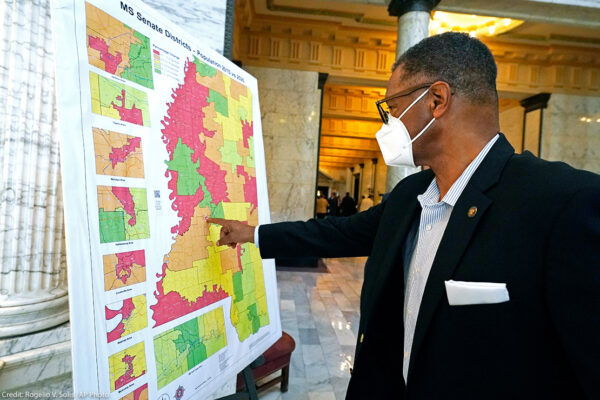
District lines used to elect Mississippi鈥檚 Supreme Court have gone unchanged for more than 35 years. We鈥檙e suing because the current lines crack the Mississippi Delta and dilute the voting strength of Black Mississippians in state Supreme Court elections, in violation of the Voting Rights Act.
Status: Ongoing
View Case
Featured
U.S. Supreme Court
Oct 2025
Voting Rights
State Board of Election Commissioners v. Mississippi State Conference of the NAACP
Mississippi has a growing Black population, which is already the largest Black population percentage of any state in the country. Yet. Black Mississippians continue to be significantly under-represented in the state legislature, as Mississippi鈥檚 latest districting maps fail to reflect the reality of the state鈥檚 changing demographics. During the 2022 redistricting process, the Mississippi legislature refused to create any new districts where Black voters have a chance to elect their preferred representative. The current district lines therefore dilute the voting power of Black Mississippians and continue to deprive them of political representation that is responsive to their needs and concerns, including severe disparities in education and healthcare.
U.S. Supreme Court
Jun 2022
Reproductive Freedom
Dobbs v. Jackson Women鈥檚 Health Organization
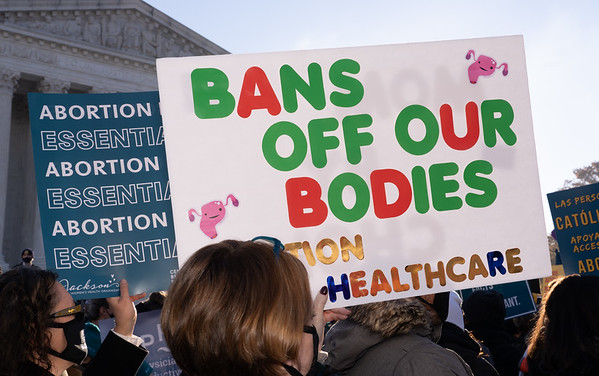
The case concerns the constitutionality of a Mississippi law prohibiting abortions after the fifteenth week of pregnancy. The state used the case as a vehicle to ask the Supreme Court to take away the federal constitutional right to abortion it first recognized 50 years before in Roe v. Wade. On June 24, 2022, the Supreme Court of the United States accepted the state鈥檚 invitation and overturned Roe eliminating the federal constitutional right to abortion.
Mississippi
Mar 2017

Smart Justice
Prisoners' Rights
Dockery v. Hall
The ACLU, the Southern Poverty Law Center (SPLC), the Law Offices of Elizabeth Alexander, and the law firm of Covington & Burling LLP, filed a petition for class certification and expert reports for a federal lawsuit on behalf of prisoners at the East Mississippi Correctional Facility (EMCF). The lawsuit, which was filed in May 2013, describes the for-profit prison as hyper-violent, grotesquely filthy and dangerous. EMCF is operated "in a perpetual state of crisis" where prisoners are at "grave risk of death and loss of limbs." The facility, located in Meridian, Mississippi, is supposed to provide intensive treatment to the state's prisoners with serious psychiatric disabilities, many of whom are locked down in long-term solitary confinement.
All Cases
21 Mississippi Cases
Mississippi Supreme Court
May 2024
Criminal Law Reform
Love v. State
This case in the Mississippi Supreme Court is a post-conviction appeal of a pro se defendant, Mr. Soweto Love, who argued that his guilty plea was not entered knowingly, voluntarily, and intelligently. The ACLU鈥檚 State Supreme Court Initiative, alongside the ACLU of Mississippi, filed an amicus brief arguing that the law is on Mr. Love鈥檚 side, but urging the Court to exercise its discretion to inform Mr. Love that a win could resuscitate his charge and expose him to longer sentences. Consistent with the ACLU amicus brief, the Mississippi Supreme Court held that the trial court had plainly erred by misinforming Mr. Love that his applicable mandatory minimum was one year of imprisonment on each count to which he had pled guilty, when in in fact the mandatory minimum sentence was five years鈥� imprisonment on each count. The Court remanded Mr. Love鈥檚 case to the trial court for an evidentiary hearing.
Explore case
Mississippi Supreme Court
May 2024
Criminal Law Reform
Love v. State
This case in the Mississippi Supreme Court is a post-conviction appeal of a pro se defendant, Mr. Soweto Love, who argued that his guilty plea was not entered knowingly, voluntarily, and intelligently. The ACLU鈥檚 State Supreme Court Initiative, alongside the ACLU of Mississippi, filed an amicus brief arguing that the law is on Mr. Love鈥檚 side, but urging the Court to exercise its discretion to inform Mr. Love that a win could resuscitate his charge and expose him to longer sentences. Consistent with the ACLU amicus brief, the Mississippi Supreme Court held that the trial court had plainly erred by misinforming Mr. Love that his applicable mandatory minimum was one year of imprisonment on each count to which he had pled guilty, when in in fact the mandatory minimum sentence was five years鈥� imprisonment on each count. The Court remanded Mr. Love鈥檚 case to the trial court for an evidentiary hearing.
Mississippi
Dec 2023
Voting Rights
Hopkins v. Watson (Amicus)
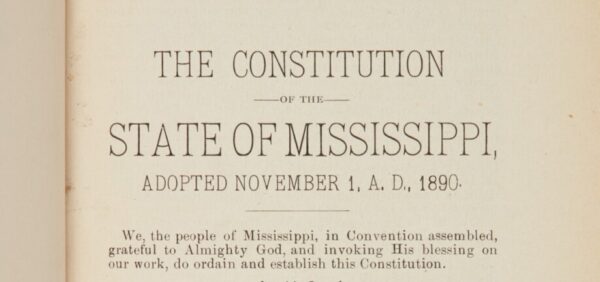
Mississippi is home to one of the strictest felon disenfranchisement schemes in the nation. The Mississippi Constitution permanently disenfranchises citizens upon a single felony conviction for certain crimes, including minor offenses like writing a bad check. As a result, the loss of rights under Mississippi鈥檚 scheme is mandatory, permanent, and effectively irrevocable. In Hopkins, plaintiffs, a class of formerly incarcerated individuals who lost their right to vote despite completing their sentences, argued that their disenfranchisement violated the Eighth Amendment鈥檚 prohibition on cruel and unusual punishment. A three-judge panel of the U.S. Court of Appeals for the Fifth Circuit ruled in the plaintiffs鈥� favor and struck down Mississippi鈥檚 disenfranchisement scheme as cruel and unusual punishment. But the Fifth Circuit decided to rehear the case en banc, a rare occurrence in which a case is reconsidered by the entire panel of the circuit鈥檚 active judges.
Explore case
Mississippi
Dec 2023
Voting Rights
Hopkins v. Watson (Amicus)
Mississippi is home to one of the strictest felon disenfranchisement schemes in the nation. The Mississippi Constitution permanently disenfranchises citizens upon a single felony conviction for certain crimes, including minor offenses like writing a bad check. As a result, the loss of rights under Mississippi鈥檚 scheme is mandatory, permanent, and effectively irrevocable. In Hopkins, plaintiffs, a class of formerly incarcerated individuals who lost their right to vote despite completing their sentences, argued that their disenfranchisement violated the Eighth Amendment鈥檚 prohibition on cruel and unusual punishment. A three-judge panel of the U.S. Court of Appeals for the Fifth Circuit ruled in the plaintiffs鈥� favor and struck down Mississippi鈥檚 disenfranchisement scheme as cruel and unusual punishment. But the Fifth Circuit decided to rehear the case en banc, a rare occurrence in which a case is reconsidered by the entire panel of the circuit鈥檚 active judges.
U.S. Supreme Court
May 2023
Voting Rights
Racial Justice
Harness v. Watson (Amicus)
Whether Mississippi鈥檚 1890 felony disenfranchisement law, adopted for the express purpose of disenfranchising Black voters, violates the Fourteenth Amendment鈥檚 Equal. Protection Clause.
Explore case
U.S. Supreme Court
May 2023
Voting Rights
Racial Justice
Harness v. Watson (Amicus)
Whether Mississippi鈥檚 1890 felony disenfranchisement law, adopted for the express purpose of disenfranchising Black voters, violates the Fourteenth Amendment鈥檚 Equal. Protection Clause.
U.S. Supreme Court
Dec 2021
Juvenile Justice
Jones v. Mississippi
Whether the Eighth Amendment requires a judge or jury to make a finding that a juvenile is 鈥減ermanently incorrigible鈥� before imposing a sentence of life without parole.
Explore case
U.S. Supreme Court
Dec 2021
Juvenile Justice
Jones v. Mississippi
Whether the Eighth Amendment requires a judge or jury to make a finding that a juvenile is 鈥減ermanently incorrigible鈥� before imposing a sentence of life without parole.

Mississippi
Nov 2021
Religious Liberty
ABRAHAM HOUSE OF GOD V. CITY OF HORN LAKE
Horn Lake officials unlawfully denied zoning approval for a proposed mosque due to anti-Muslim bias, according to a federal lawsuit filed in November 2021 by the 老熟女午夜福利, the ACLU of Mississippi, and Simpson Thacher & Bartlett LLP. Just before holding a vote on the mosque鈥檚 site plan, one Horn Lake Alderman ominously warned, 鈥渋f you let them build it, they will come鈥� and encouraged his fellow board members to 鈥渟top it before it gets here.鈥�
Explore case
Mississippi
Nov 2021
Religious Liberty
ABRAHAM HOUSE OF GOD V. CITY OF HORN LAKE
Horn Lake officials unlawfully denied zoning approval for a proposed mosque due to anti-Muslim bias, according to a federal lawsuit filed in November 2021 by the 老熟女午夜福利, the ACLU of Mississippi, and Simpson Thacher & Bartlett LLP. Just before holding a vote on the mosque鈥檚 site plan, one Horn Lake Alderman ominously warned, 鈥渋f you let them build it, they will come鈥� and encouraged his fellow board members to 鈥渟top it before it gets here.鈥�