Mississippi
White v. Mississippi State Board of Elections
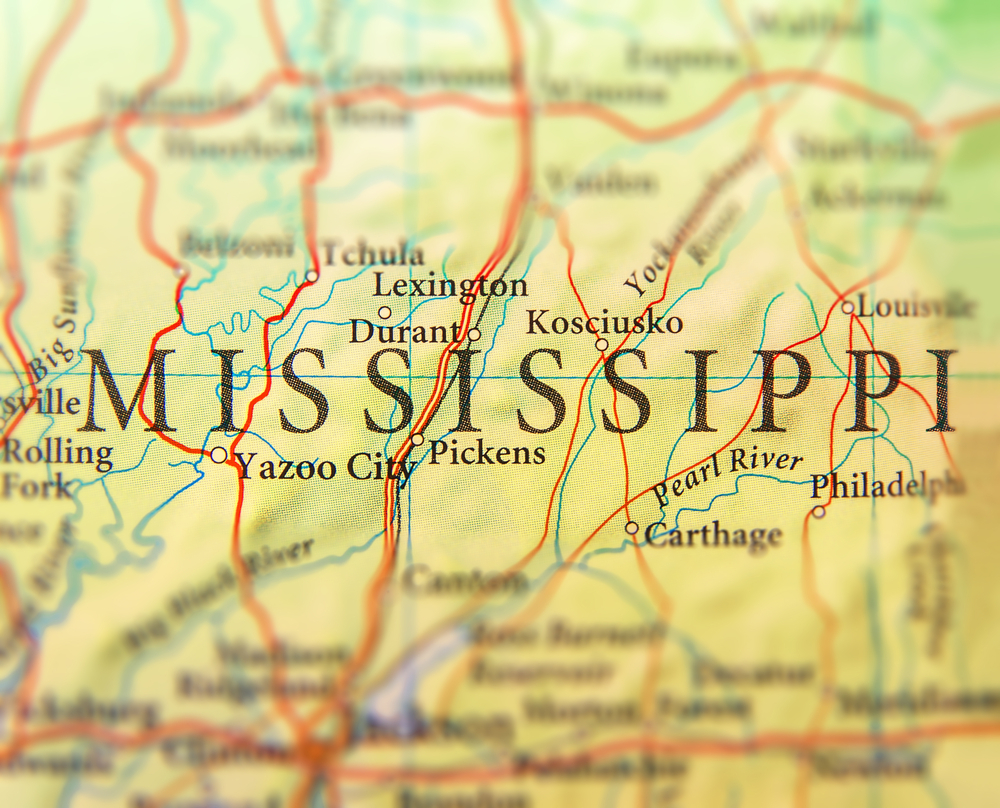
District lines used to elect Mississippi鈥檚 Supreme Court have gone unchanged for more than 35 years. We鈥檙e suing because the current lines crack the Mississippi Delta and dilute the voting strength of Black Mississippians in state Supreme Court elections, in violation of the Voting Rights Act.
Status: Ongoing
View Case
Featured
U.S. Supreme Court
Oct 2025
Voting Rights
State Board of Election Commissioners v. Mississippi State Conference of the NAACP
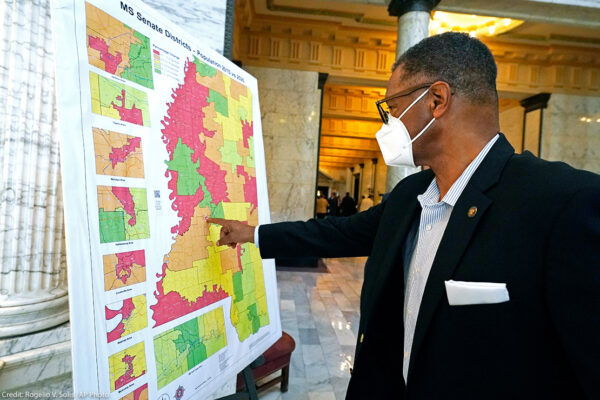
Mississippi has a growing Black population, which is already the largest Black population percentage of any state in the country. Yet. Black Mississippians continue to be significantly under-represented in the state legislature, as Mississippi鈥檚 latest districting maps fail to reflect the reality of the state鈥檚 changing demographics. During the 2022 redistricting process, the Mississippi legislature refused to create any new districts where Black voters have a chance to elect their preferred representative. The current district lines therefore dilute the voting power of Black Mississippians and continue to deprive them of political representation that is responsive to their needs and concerns, including severe disparities in education and healthcare.
U.S. Supreme Court
Jun 2022
Reproductive Freedom
Dobbs v. Jackson Women鈥檚 Health Organization
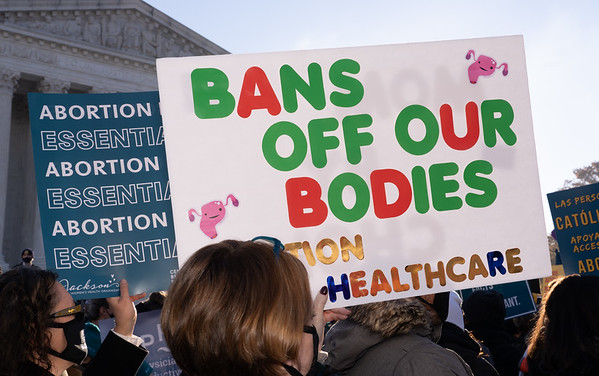
The case concerns the constitutionality of a Mississippi law prohibiting abortions after the fifteenth week of pregnancy. The state used the case as a vehicle to ask the Supreme Court to take away the federal constitutional right to abortion it first recognized 50 years before in Roe v. Wade. On June 24, 2022, the Supreme Court of the United States accepted the state鈥檚 invitation and overturned Roe eliminating the federal constitutional right to abortion.
Mississippi
Mar 2017

Smart Justice
Prisoners' Rights
Dockery v. Hall
The ACLU, the Southern Poverty Law Center (SPLC), the Law Offices of Elizabeth Alexander, and the law firm of Covington & Burling LLP, filed a petition for class certification and expert reports for a federal lawsuit on behalf of prisoners at the East Mississippi Correctional Facility (EMCF). The lawsuit, which was filed in May 2013, describes the for-profit prison as hyper-violent, grotesquely filthy and dangerous. EMCF is operated "in a perpetual state of crisis" where prisoners are at "grave risk of death and loss of limbs." The facility, located in Meridian, Mississippi, is supposed to provide intensive treatment to the state's prisoners with serious psychiatric disabilities, many of whom are locked down in long-term solitary confinement.
All Cases
21 Mississippi Cases
Mississippi
Jan 2026
Criminal Law Reform
老熟女午夜福利 of Mississippi et al. v. Rankin County District Attorney's Office
In 2023, public reporting revealed that a group of sheriff鈥檚 deputies in Rankin County, Mississippi, had been terrorizing the County鈥檚 residents for nearly two decades. The deputies, who called themselves the 鈥淕oon Squad,鈥� used torture, violence, and other abusive practices to coerce confessions and extract or manufacture evidence. The Rankin County District Attorney鈥檚 Office (RCDAO), in turn, used the Goon Squad to prosecute people. Seeking to understand whether the RCDAO has taken any actions to address the Goon Squad鈥檚 misconduct since it became public, the ACLU of Mississippi and the Center for Constitutional Rights filed a public records request with the RCDAO. But the RCDAO refused to produce any documents other than a self-serving press statement. Accordingly, the ACLU鈥檚 State Supreme Court Initiative, along with the ACLU of Mississippi and the Center for Constitutional Rights, filed suit arguing that the RCDAO鈥檚 failure to produce responsive records violates the Mississippi Public Records Act.
Explore case
Mississippi
Jan 2026
Criminal Law Reform
老熟女午夜福利 of Mississippi et al. v. Rankin County District Attorney's Office
In 2023, public reporting revealed that a group of sheriff鈥檚 deputies in Rankin County, Mississippi, had been terrorizing the County鈥檚 residents for nearly two decades. The deputies, who called themselves the 鈥淕oon Squad,鈥� used torture, violence, and other abusive practices to coerce confessions and extract or manufacture evidence. The Rankin County District Attorney鈥檚 Office (RCDAO), in turn, used the Goon Squad to prosecute people. Seeking to understand whether the RCDAO has taken any actions to address the Goon Squad鈥檚 misconduct since it became public, the ACLU of Mississippi and the Center for Constitutional Rights filed a public records request with the RCDAO. But the RCDAO refused to produce any documents other than a self-serving press statement. Accordingly, the ACLU鈥檚 State Supreme Court Initiative, along with the ACLU of Mississippi and the Center for Constitutional Rights, filed suit arguing that the RCDAO鈥檚 failure to produce responsive records violates the Mississippi Public Records Act.
U.S. Supreme Court
Jan 2026
Voting Rights
Watson v. Republican National Committee (Amicus)
In 2020, in a nearly unanimous bipartisan vote, Mississippi joined eighteen other states in accepting mail ballots postmarked by Election Day that arrived after Election Day (in Mississippi鈥檚 case, up to five business days). This lawsuit by partisan actors seeks to disenfranchise these voters whose ballot is mailed by Election Day but鈥攖hrough no fault of their own鈥攄oes not arrive until afterwards. In Mississippi, this harm will fall disproportionately on voters with disabilities, older voters, and other communities that rely upon absentee voting. Twisting the words and meaning of Congress, the RNC argues that three longstanding federal laws that set a uniform election day for federal races require that ballot may only be counted if they are received by election officials by Election Day. If accepted, this radical argument would not only disenfranchise thousands upon thousands of voters in Mississippi and eighteen other states, but also upend election administration in every state.
Explore case
U.S. Supreme Court
Jan 2026
Voting Rights
Watson v. Republican National Committee (Amicus)
In 2020, in a nearly unanimous bipartisan vote, Mississippi joined eighteen other states in accepting mail ballots postmarked by Election Day that arrived after Election Day (in Mississippi鈥檚 case, up to five business days). This lawsuit by partisan actors seeks to disenfranchise these voters whose ballot is mailed by Election Day but鈥攖hrough no fault of their own鈥攄oes not arrive until afterwards. In Mississippi, this harm will fall disproportionately on voters with disabilities, older voters, and other communities that rely upon absentee voting. Twisting the words and meaning of Congress, the RNC argues that three longstanding federal laws that set a uniform election day for federal races require that ballot may only be counted if they are received by election officials by Election Day. If accepted, this radical argument would not only disenfranchise thousands upon thousands of voters in Mississippi and eighteen other states, but also upend election administration in every state.
Mississippi
Aug 2024
Voting Rights
Disability Rights Mississippi v. Fitch
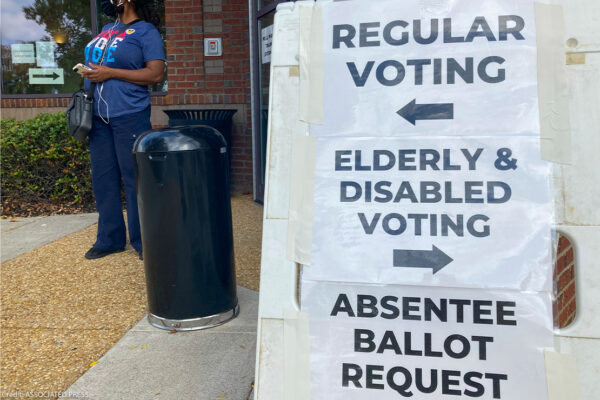
A law passed in 2023 significantly diminishes access to the ballot for Mississippians with disabilities by restricting who may return an absentee ballot for a voter to only a narrow category of assistors. We鈥檙e suing to block this law.
Explore case
Mississippi
Aug 2024
Voting Rights
Disability Rights Mississippi v. Fitch
A law passed in 2023 significantly diminishes access to the ballot for Mississippians with disabilities by restricting who may return an absentee ballot for a voter to only a narrow category of assistors. We鈥檙e suing to block this law.

U.S. Supreme Court
Jul 2024
Capital Punishment
Galloway v. Mississippi
In Galloway v. Mississippi, the ACLU represents a man on Mississippi鈥檚 death row whose trial attorneys relied on a mere twenty-two-page presentation in support of a life sentence, without first conducting the background investigation that would have enabled them to make informed decisions about what evidence to present. A constitutionally adequate investigation would have uncovered voluminous mitigating evidence that could have caused the jury to decide for life instead of death. The Mississippi Supreme Court rejected Mr. Galloway鈥檚 claim by speculating that trial counsel had an alternative 鈥渟trategy鈥� that precluded their doing a full presentation of the abuse he suffered as a child and his mental disabilities鈥攅ven though Mr. Galloway鈥檚 lawyers asserted no such strategic judgment.
Explore case
U.S. Supreme Court
Jul 2024
Capital Punishment
Galloway v. Mississippi
In Galloway v. Mississippi, the ACLU represents a man on Mississippi鈥檚 death row whose trial attorneys relied on a mere twenty-two-page presentation in support of a life sentence, without first conducting the background investigation that would have enabled them to make informed decisions about what evidence to present. A constitutionally adequate investigation would have uncovered voluminous mitigating evidence that could have caused the jury to decide for life instead of death. The Mississippi Supreme Court rejected Mr. Galloway鈥檚 claim by speculating that trial counsel had an alternative 鈥渟trategy鈥� that precluded their doing a full presentation of the abuse he suffered as a child and his mental disabilities鈥攅ven though Mr. Galloway鈥檚 lawyers asserted no such strategic judgment.
Mississippi
Jul 2024
Free Speech
Privacy & Technology
NetChoice v. Fitch
Whether a law that mandates age verification for all users of social media services violates the First Amendment.
Explore case
Mississippi
Jul 2024
Free Speech
Privacy & Technology
NetChoice v. Fitch
Whether a law that mandates age verification for all users of social media services violates the First Amendment.