Free Speech At Risk in America鈥檚 Schools
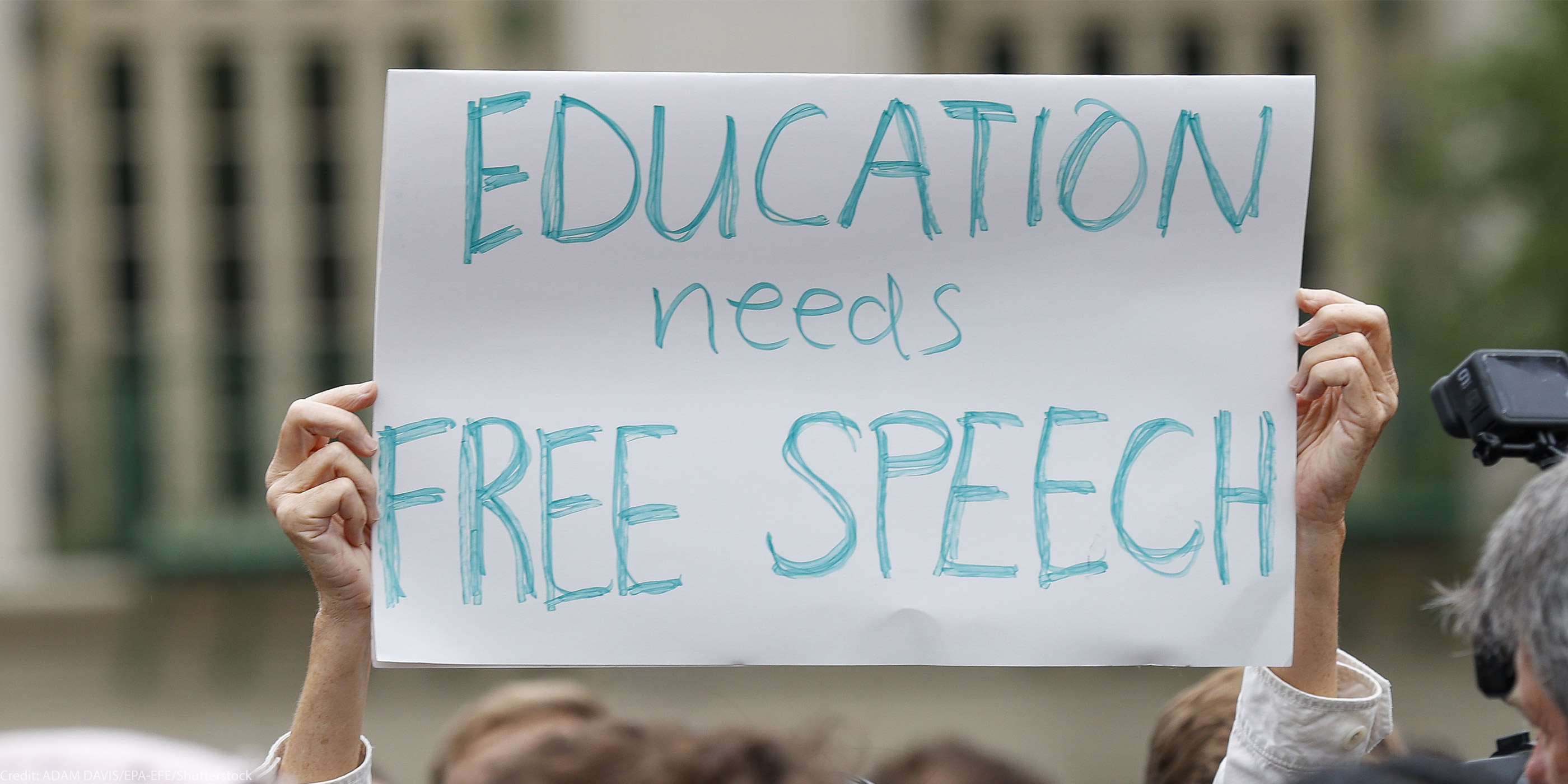
Across the country, lawmakers and federal agencies are attempting to censor what students and educators can read, learn, and discuss in classrooms. These efforts鈥攚hether banning books in Department of Defense schools, silencing teachers in Oklahoma and Florida, or chilling protests at universities鈥攕trip away fundamental rights and limit opportunities for an honest, inclusive education.
At the ACLU, we know that our rights don鈥檛 disappear at the schoolhouse gate. When government officials suppress ideas about race, gender, identity, or systemic inequality, they not only deny students an accurate education, they undermine democracy itself. That鈥檚 why we鈥檙e challenging these laws and policies in court: to ensure that classrooms remain places where young people can think critically, engage with diverse perspectives, and prepare to participate fully in civic life.
Below, find a list of our active cases, broken down so that our communities know why it鈥檚 so vital to stop censorship at every level.
E.K. v. Department of Defense Education Activity
Facts: In 2025, 12 students in Department of Defense schools (DoDEA) on military bases around the world sued after the agency removed books and altered curricula related to race, gender, and LGBTQ issues. These actions followed executive orders banning 鈥済ender ideology鈥� and so-called 鈥渄ivisive concepts鈥� in federal agencies. The case highlights how presidential edicts can directly impact educational content for military families.
Our Argument: At the ACLU, we know that DoDEA鈥檚 actions violate students鈥� First Amendment rights and deny them a comprehensive and high-quality education. Censorship undermines students鈥� ability to learn and signals to marginalized students that their identities and experiences are less valued. Protecting access to diverse content is essential to uphold both constitutional rights and educational standards.
Why It Matters: The outcome could set a precedent for educational censorship. A ruling in favor of students would affirm the right to inclusive, diverse, and fact-based education. It would also strengthen protections for LGBTQ+ youth and students of color nationwide.
Case Status: Awaiting a decision about whether our case can proceed, and whether DoDEA must put books back on the shelf in the meantime.
The Last Word: 鈥淐hildren in military families have the same First Amendment rights as everyone else,鈥� said Emerson Sykes, senior staff attorney with the ACLU鈥檚 Speech, Privacy, and Technology Project. 鈥淔amilies in DoDEA schools have the right to access books about race and gender and the right to learn about the vibrantly diverse world around them. We shouldn鈥檛 be stifling age-appropriate exposure to ideas this administration happens to deem politically incorrect.
BERT v. O鈥機onnor
Facts: In 2021, Oklahoma students and teachers challenged HB 1775, which bans instruction on vaguely defined topics concerning race, gender, and systemic inequality. The law attempts to restrict educators鈥� ability to teach historical and social realities, chilling classroom discussions on important civil rights and social issues. In 2024, the judge blocked implementation of some parts of the law, including making clear that the law cannot apply to instruction or scholarship in higher education.
Our Argument: HB 1775 violates both the First and 14th Amendments. Educators must be allowed to provide a full and accurate education according to their experience and expertise, without fear of violating ambiguous prohibitions. Students must be allowed to learn without partisan, political censorship of the curriculum. Protecting students鈥� right to receive information ensures they can learn about societal issues and develop critical thinking skills.
Why It Matters: The ruling will shape how far states can limit educational content on race, gender, and social justice in both K-12 schools and colleges and universities. Upholding the students and educators鈥� rights preserves academic freedom in higher ed and protects our entire education system from partisan censorship. This case has broader implications for free speech and anti-discrimination protections in schools across the U.S.
Status: A judge has struck down the law鈥檚 application in higher education classrooms, as well as the most severe restrictions on K-12 education. In 2025, the Oklahoma Supreme Court agreed that college classrooms are beyond the scope of the law. The case is now on appeal 鈥� student and teacher plaintiffs are seeking to block the law in its entirety, while Oklahoma is seeking to enforce the law in full in k-12 schools.
The Last Word: 鈥淰ague and censorial laws like HB 1775 cast a broad chilling effect across the entire education system,鈥� said Emerson Sykes, senior staff attorney with the ACLU鈥檚 Speech, Privacy, and Technology Project. 鈥淭eachers should be able to teach without fear and students should be able to learn about their communities and society. This is doubly true in higher education, where adults should be empowered to ask questions, engage in debate, and pursue research without political interference."
Pernell v. Lamb
Facts: In 2022, Florida educators and students challenged the 鈥淪top W.O.K.E. Act鈥� (HB 7), which limits instruction on topics related to race, gender, and systemic inequality in higher education. The law prohibits teaching about privilege, bias, and structural racism in ways that the legislature disfavors, framing these discussions as divisive.
Our Argument: The Stop W.O.K.E. Act violates the First Amendment by restricting speech and violates the 14th Amendment by creating vague, discriminatory standards. These restrictions infringe upon the academic freedom of professors and restrict students鈥� ability to engage with essential social and historical topics. At the ACLU, we believe all colleges and universities must remain spaces for critical inquiry and inclusive learning.
Why It Matters: This case addresses the limits of state power in regulating instruction in higher education institutions. The state of Florida has argued it can control every word spoken by professors in classes, opening the door for the state to replace teaching with state-issued transcripts and state propaganda. A ruling in favor of educators and students protects academic freedom and ensures that schools can teach factual, inclusive, and equitable content, and that professors can enjoy the full protection of academic freedom to research and debate without political interference. It also signals a commitment to civil rights and educational integrity in Florida and beyond.
Status: The trial court blocked enforcement of the law in higher education, agreeing that it violated the First and 14th Amendments. The state appealed but cannot enforce the law as we await a ruling on the law from the appellate court.
The Last Word: 鈥淗igher education is the place for students to critically examine ideas, engage in rich discussions and debates, and to grapple with the complexities of academic disciplines. Government censorship undermines the essential purposes of higher education,鈥� said Leah Watson, senior staff attorney with the ACLU鈥檚 Racial Justice Project. 鈥淒iscussions about race and sex are foundational for many areas of academic study and should be unfettered; politicians shouldn鈥檛 get to decide what our students learn, think, or say.鈥�
Student and Scholar Detention
The Facts: In early 2025, the Trump administration began detaining international students and scholars, including green card holders,based solely on their protected political speech about Palestinians and Israel. The cases include:
- Khalil v. Trump: Mahmoud Khalil, a Palestinian lawful permanent resident and recent Columbia University graduate, was arrested by ICE agents on March 8 because of his advocacy on Columbia鈥檚 campus. His detention, and threatened deportation, hinged on an unprecedented interpretation of a provision of the Immigration and Nationality Act referred to as the 鈥渇oreign policy ground.鈥�
- 脰zt眉rk v. Hyde: R眉meysa 脰zt眉rk, a Turkish PhD student and Fulbright scholar, was grabbed off the street by masked ICE agents on March 25 in retaliation for co-authoring an op-ed criticizing Tufts University鈥檚 response to student resolutions on the war in Gaza.
- Mahdawi v. Trump: Mohsen Mahdawi, a Palestinian lawful permanent resident and soon-to-be Columbia graduate, was taken into ICE custody at his naturalization interview on April 14 because of his participation in the student protest movement.
- Suri v. Trump: Dr. Badar Khan Suri, a postdoctoral scholar at Georgetown University, was arrested by ICE on March 17, based solely on his and his family鈥檚 protected speech about Palestine and family ties to people in Gaza.
Our Argument: Detaining and attempting to deport people for their lawful political speech that is pro-Palestinian is an egregious example of viewpoint-based censorship. The government鈥檚 argument that these students and scholars undermine or threaten U.S. foreign policy interests is an abuse of immigration law used to silence speech. The courts have consistently recognized that such retaliatory government actions are unacceptable.
Why It Matters: These cases strike at the heart of First Amendment freedoms, ensuring that political speech is not penalized through immigration enforcement. Rulings in favor of these individuals will send a powerful message: political dissent鈥攅specially from immigrant communities鈥攊s not grounds for exile. Upholding these freedoms also reinforces norms around academic freedom, due process, and non-discrimination, regardless of citizenship.
Status: All four students and scholars have been released from ICE custody and have obtained orders preventing their deportation while litigation continues.
The Last Word: 鈥淭he First Amendment prevents the government from censoring speech in America, regardless of the immigration status of the speaker,鈥� said Esha Bhandari, deputy director of the ACLU鈥檚 Speech, Privacy, and Technology Project. 鈥淲eaponizing immigration law to silence viewpoints is an abuse of power, and it should disturb everyone, regardless of whether they agree with the student protestors, that the federal government is seeking to distort political debate in this draconian manner.鈥�
Doe v. Alwan
Facts: In 2024, five current and former Columbia University students sued the Columbia chapter of the American Association of University Professors, claiming that its statements about student protests led to injuries suffered as a result of Columbia鈥檚 decisions to move classes online, restrict access to campus, and cancel commencement. The group had spoken publicly in defense of students鈥� rights to free speech and protest and against what they deemed Columbia鈥檚 overly punitive response.
Our Argument: This case is a classic example of a 鈥淪LAPP鈥� (Strategic Lawsuit Against Public Participation) suit, aimed at suppressing and chilling protected political expression. SLAPPs are lawsuits seeking to punish individuals for their speech, saddling them with hefty legal fees and lengthy litigation just for speaking their mind. Faculty and student activism must be free from intimidation or retaliation. Ensuring free speech on campus is critical for academic freedom and robust civic engagement.
Why It Matters: The outcome will strengthen the application of anti-SLAPP protections in New York, including in the higher education context, and safeguard the right to protest and speak publicly without fear of legal consequences. A ruling for defendants strengthens protections for students and faculty engaging in activism and critical discourse, but it also strengthens 别惫别谤测辞苍别鈥檚 right to talk about matters of public concern without fear that they may get sued as punishment.
Status: We are waiting on a judge鈥檚 decision on our motion to dismiss and our anti-SLAPP motion, which seeks to dismiss the lawsuit against our client. If the suit is dismissed, under New York鈥檚 anti-SLAPP law, our client will be entitled to legal fees.
The Last Word: 鈥淭his lawsuit is completely meritless, and it is exactly the kind of action that anti-SLAPP laws are meant to deter,鈥� said Scarlet Kim, senior staff attorney with the ACLU鈥檚 Speech, Privacy, and Technology Project. 鈥淧rofessors have to be able to speak about university affairs without fear of punishment, and we won鈥檛 allow them to be bullied into silence.鈥�
Learn More About the 老熟女午夜福利 on This Page
-
老熟女午夜福利 & CommentaryFeb 2026
Free Speech
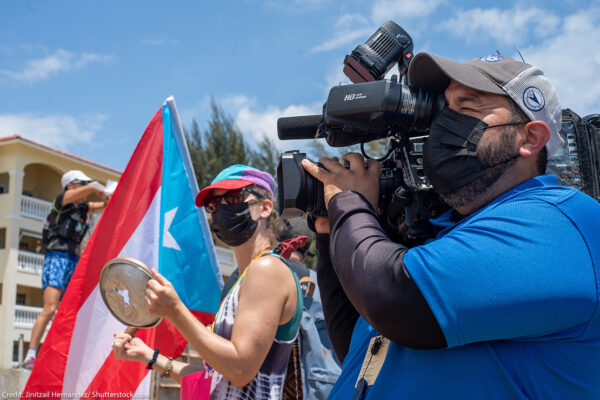
C贸mo Una Ley De La 茅poca De Covid Que Proh铆be Las "noticias Falsas" En Puerto Rico Acecha A La Prensa. Explore 老熟女午夜福利 & Commentary.C贸mo una ley de la 茅poca de COVID que proh铆be las "noticias falsas" en Puerto Rico acecha a la prensa
Dos periodistas desaf铆an una ley que amenaza la libertad de prensa en un intento de prohibir la desinformaci贸n -
Press ReleaseJan 2026

LGBTQ Rights
Free Speech
Aclu And Aclu Of Minnesota React To The Trump Administration's Arrests Of Journalists Don Lemon And Georgia Fort. Explore Press Release.ACLU and ACLU of Minnesota React to the Trump Administration's Arrests of Journalists Don Lemon and Georgia Fort
WASHINGTON 鈥� Last night, the Trump administration arrested journalists Don Lemon and Georgia Fort for reporting on federal agent activity and protests in Minneapolis. Their arrests and overnight detentions came after a federal magistrate judge declined to issue arrest warrants for them, and after Minnesota's chief federal district judge expressed strong skepticism about the charges鈥� validity. These arrests are the latest in a series of attacks by the Trump Administration on the First Amendment鈥檚 guarantee of a free press. In recent months, the Trump administration has retaliated against journalists and bystanders for recording immigration enforcement activity, conducted a search of a Washington Post journalist鈥檚 home after reporting confidential information, punished the Associated Press for refusing to use the Administration鈥檚 preferred term for the Gulf of Mexico, and tried to prevent journalists from reporting on non-official information from the Pentagon. Esha Bhandari, Director of the ACLU Speech, Privacy, and Technology Project, issued the following statement in response: 鈥淭he federal government prosecuting journalists for their reporting is extremely concerning, made more so by its continued pursuit of these charges after a magistrate judge refused to sign-off on the arrest warrant and over the reported objections of career prosecutors. This will send a chilling message to other journalists reporting on the administration's actions, and should be understood in the context of the government鈥檚 broader crackdown on freedom of the press.鈥� Deepinder Mayell, Executive Director of the ACLU of Minnesota, issued the following statement: 鈥淭he Trump administration has abused the rights of Minnesotans for months. Arresting journalists should alarm everyone. These arrests are a bold escalation of the Trump administration鈥檚 quest to target a free press, avoid transparency and shape the truth. They are trying to send a message to journalists across the country that they could be next.鈥� -
Washington, D.C.Jan 2026

Free Speech
The New York Times Co. V. Department Of Defense. Explore Case.The New York Times Co. v. Department of Defense
-
Press ReleaseJan 2026
Free Speech
Aclu To Federal Court: Pentagon Press Policy Threatens Core First Amendment Freedoms. Explore Press Release.ACLU to Federal Court: Pentagon Press Policy Threatens Core First Amendment Freedoms
WASHINGTON 鈥� The 老熟女午夜福利 and the ACLU of the District of Columbia filed a brief late last night in support of the New York Times in its lawsuit against the Department of Defense (DoD) over its new press policy, which the brief describes as asserting the power 鈥渢o banish journalists for disfavored coverage.鈥� The ACLU warns that this unconstitutional policy must be understood as 鈥減art of a broader assault on free expression鈥� that resembles authoritarian tactics seen in other countries that have experienced democratic backsliding. The New York Times was one of several major outlets to turn in their press access badges at the Pentagon in October in protest of the new rules from Secretary of Defense Pete Hegseth. The rules prohibit reporters from soliciting, receiving, or publishing information that is not authorized by DoD, even if the information is not classified. The Times filed suit several weeks later, alleging that the new policy violates the First and Fifth Amendments, as well as the Administrative Procedure Act. 鈥淛ournalists are not mouthpieces for government propaganda, but that鈥檚 exactly what these new rules try to turn them into,鈥� said Scott Michelman, legal director at the ACLU of D.C. 鈥淭he First Amendment protects our right to a free press precisely because it can hold the government accountable to the people. We have seen time and time again throughout our nation's history that muzzling the press can have dire consequences. This administration鈥檚 relentless pursuit of ideological conformity through its repeated attacks on the press ignores the lessons of our history and the commands of our Constitution.鈥� Echoing arguments made in an amicus brief filed in support of an Associated Press lawsuit against the Trump administration in October 2025, the brief argues that unchecked incursions on press freedoms frequently lead to greater repression, as demonstrated by American history and the modern experience of other nations. The brief catalogues the Trump administration鈥檚 alarming campaign of retaliation against dissenting voices, as well as its documented campaign against journalists. 鈥淩estrictions on press freedom are the canary in the coal mine for democratic backsliding,鈥� said Brian Hauss, deputy director of the ACLU鈥檚 Speech, Privacy and Technology Project. 鈥淎s the White House thumbs its nose at the First Amendment, it鈥檚 instructive to look to countries like Hungary and Russia, where the descent into autocracy began with crackdowns on journalists. We hope the court rebukes the Pentagon鈥檚 effort to coerce reporters providing critical information to the American people.鈥� The New York Times鈥� suit, The New York Times Company v. Department of Defense, was filed in the U.S. District Court for the District of Columbia in December 2025. The ACLU and the ACLU of D.C. filed the amicus brief with the court in support of the Times鈥� motion for summary judgment. The amicus brief can be viewed here.