
What Does Free Speech Mean Online?
January 28, 2021
Weeks ago, President Trump was banned from nearly every social media platform because of his role in the events at the Capitol Building on January 6th. Just before Congress was set to certify Joe Biden as the next president of the United States, Trump instructed his supporters to, quote, “fight much harder� against “bad people� and “show strength� at the Capitol. The social media bans on Trump and his supporters ignited a debate about whether these social media companies have too much power over the speech of their users. Should they have banned Trump sooner? Are these bans legal? What kind of precedent does banning Trump and others set for the speech of marginalized communities? And should the government rein in the private sector power of these companies?
Joining us to address some of these questions is Kate Ruane. She's senior legislative counsel for the First Amendment of the ACLU.
This Episode Covers the Following ÀÏÊìÅ®ÎçÒ¹¸£Àû
-
Press ReleaseFeb 2026

Free Speech
Privacy & Technology
Aclu Moves To Quash Abusive Subpoena Aimed At Tracking Down Man Who Criticized Department Of Homeland Security. Explore Press Release.ACLU Moves to Quash Abusive Subpoena Aimed at Tracking Down Man Who Criticized Department of Homeland Security
SAN FRANCISCO – A Philadelphia-area man, identified in court filings as Jon Doe, is challenging an administrative subpoena issued to Google seeking information about his identity and home address after he sent an email to a Department of Homeland Security official criticizing their treatment of a man seeking asylum from Afghanistan. After reading an article in the Washington Post detailing misleading arguments made by the DHS attorney attempting to deport the asylum-seeker to Afghanistan, Doe sent a short email to the attorney at his publicly available DHS email address. The email urged DHS to “apply principles of common sense and decencyâ€� in its treatment of the asylum seeker. Just four hours after Doe sent the email, DHS issued an administrative subpoena to Google seeking a variety of information about Doe and his Gmail account. Google alerted Doe to the subpoena and has not yet fulfilled it. About two weeks after he was notified about the subpoena, two DHS agents and a local police officer showed up to his home to interrogate him about the email. “As a longtime advocate for the rights and dignity of refugees and asylum seekers, the story I read in the Washington Post saddened and alarmed me," said Jon Doe. "In a democracy, contacting your government about things you feel strongly about is a fundamental right. I exercised that right to urge my government to take this man's life seriously. For that, I am being investigated, intimidated, and targeted. I hope that by standing up for my rights and sharing my story, others will know what to do when these abusive subpoenas and investigations come knocking on their door." Yesterday, Doe filed a motion to quash the subpoena, arguing that it violates both federal law and the First Amendment because it impermissibly targets him for his constitutionally protected speech. “These types of abusive subpoenas are designed to intimidate and sow fear of government retaliation," Stephen A. Loney, ACLU-PA senior supervising attorney. "If you can’t criticize a government official without the worry of having your private records gathered and agents knocking on your door, then your First Amendment rights start to feel less guaranteed. They want to bully companies into handing over our data and to chill users’ speech. This is unacceptable in a democratic society.â€� Administrative subpoenas like the one sent to Google about Doe are not self-enforcing, not signed by a judge, and require a court order to make them actionable. They are often issued to companies silently, without the person they target knowing about them unless notified by the company. DHS has used them previously to try to unmask anonymous social media users who posted about ICE raids and has also used them to try to pressure Columbia University into sharing information about a student who had participated in pro-Palestinian protests. After the ACLU of Northern California and ACLU of Pennsylvania filed motions challenging some of these subpoenas issued to gather information about Instagram, and Facebook users, DHS withdrew the subpoenas. "If tech companies and other private actors are expected to hand over information about users just because of their political beliefs, there’s no telling when the requests would stop,â€� said Jennifer Granick, surveillance and cybersecurity counsel with the ACLU’s Speech, Privacy, and Technology Project. “Companies like Google know a lot about our lives, and we should feel confident that the government can’t get their hands on that information on a whim; it would damage the trust of users who allow them to collect sensitive information about their lives and preferences, and it would chill political expression across the board. These abusive subpoenas seek to punish individuals for their speech, but that is prohibited by the First Amendment.â€� The motion to quash the subpoena was filed in the U.S. District Court for the Northern District of California by the ÀÏÊìÅ®ÎçÒ¹¸£Àû, the ACLU of Northern California, and the ACLU of Pennsylvania. The motion can be viewed here. -
CaliforniaJan 2026

Free Speech
Privacy & Technology
Doe V. Dhs. Explore Case.Doe v. DHS
On February 2, 2026, the ACLU, ACLU of Northern California, and the ACLU of Pennsylvania filed a motion in federal court to quash a Department of Homeland Security (“DHS�) administrative subpoena seeking Google subscriber records about our client, solely because he engaged in constitutionally protected speech criticizing DHS conduct. -
ÀÏÊìÅ®ÎçÒ¹¸£Àû & CommentaryFeb 2026
Free Speech
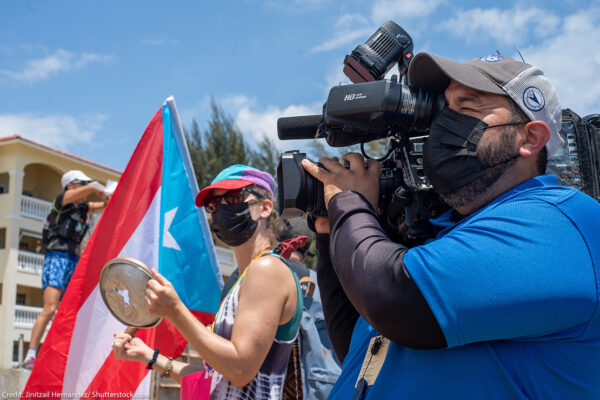
Cómo Una Ley De La época De Covid Que ProhÃbe Las "noticias Falsas" En Puerto Rico Acecha A La Prensa. Explore ÀÏÊìÅ®ÎçÒ¹¸£Àû & Commentary.Cómo una ley de la época de COVID que prohÃbe las "noticias falsas" en Puerto Rico acecha a la prensa
Dos periodistas desafÃan una ley que amenaza la libertad de prensa en un intento de prohibir la desinformación -
Press ReleaseJan 2026
LGBTQ Rights
Free Speech
Aclu And Aclu Of Minnesota React To The Trump Administration's Arrests Of Journalists Don Lemon And Georgia Fort. Explore Press Release.ACLU and ACLU of Minnesota React to the Trump Administration's Arrests of Journalists Don Lemon and Georgia Fort
WASHINGTON — Last night, the Trump administration arrested journalists Don Lemon and Georgia Fort for reporting on federal agent activity and protests in Minneapolis. Their arrests and overnight detentions came after a federal magistrate judge declined to issue arrest warrants for them, and after Minnesota's chief federal district judge expressed strong skepticism about the charges’ validity. These arrests are the latest in a series of attacks by the Trump Administration on the First Amendment’s guarantee of a free press. In recent months, the Trump administration has retaliated against journalists and bystanders for recording immigration enforcement activity, conducted a search of a Washington Post journalist’s home after reporting confidential information, punished the Associated Press for refusing to use the Administration’s preferred term for the Gulf of Mexico, and tried to prevent journalists from reporting on non-official information from the Pentagon. Esha Bhandari, Director of the ACLU Speech, Privacy, and Technology Project, issued the following statement in response: “The federal government prosecuting journalists for their reporting is extremely concerning, made more so by its continued pursuit of these charges after a magistrate judge refused to sign-off on the arrest warrant and over the reported objections of career prosecutors. This will send a chilling message to other journalists reporting on the administration's actions, and should be understood in the context of the government’s broader crackdown on freedom of the press.� Deepinder Mayell, Executive Director of the ACLU of Minnesota, issued the following statement: “The Trump administration has abused the rights of Minnesotans for months. Arresting journalists should alarm everyone. These arrests are a bold escalation of the Trump administration’s quest to target a free press, avoid transparency and shape the truth. They are trying to send a message to journalists across the country that they could be next.�